Tampilkan postingan dengan label is. Tampilkan semua postingan

Senin, 13 Juni 2016

Is Spring nearly Sprung

,
So the last couple of weeks have been so busy that feet have barely been on the floor. The most exciting thing for The Physic Garden was that the greenhouse that Kristis lovely Bruce bought for their garden is up,glassed and full of plants and seedlings, which will hopefully soon be poking their little heads through at us. The Pelargoniums are in there too and hopefully soon we will be taking cuttings of them ready for summer sale. They are such lovely plants with amazing scent which we love as they really scent the room they are in.We have plants with scents ranging from clean,crisp citrus to spicy, deep and sensual and with small,delicate leaves to big,furry ones, so there really is something for everyone and thy exclude the need for chemical room scents!
On a totally different note I would like to advise everyone to read Lia Leendertz Midnight Ramblings blog this week-its a concise and to the point comment on the state of the Middle East today and our dependancy on their oil. Its an important comment for everyone but is really critical to anyone interested in gardens and plants.
Our reliance on oil doesnt begin and end with transport or food production. Horticulture can be as oil dependant as either of these things. Pots are manufactured with oil, as are chemical fertilizers and plants are transported all over the world. Plants bought in Holland, Italy or elsewhere in Europe, have often been grown much further afield, using massive quantities of chemical fertilizer, fungicides and insecticides, many Of which we no longer use here due to fear for human health. But this cannot go on for ever and it is great to see that some independant nurseries are now trying to stock plants sourced and grown in the UK.
An important point to remember is that it took the earth 200million years to create its finite quantity of oil and it is estimated that it will take us 200 years to use it up. A scary reality.
On a less sober note, surely Spring is nearly here! I am desperate to get down onto the allotment and get some stuff in to the soil. As it is every time we set off to spend time there it starts to rain or we get there and its so sodden it takes all my time just to keep on two feet. In fact Kristi and I were there a week or so ago and I had such a spectacular fall that I kin of wish we had put a video of it on UTube!! So next weekend my aim is to sow parsnips, shallot sets, early carrots, Brusssel Sprouts and some lettuce to start us off for the season. Oh, and I need to do some work in the garden too but yet again its raining. I can feel a panic rising, but lets try to keep it in perspective!!
I also have joined the Blotanical site this week so would like to say Hi to anyone who has found me on that...I hope you enjoy!!!
Read more

Jumat, 10 Juni 2016

BrightFarms has a really cool business model

,
I recently found out about a New York City based company called BrightFarms that has a really cool, unique business model.  They "finance, design, build and operate greenhouse farms at or near supermarkets."  So basically, theyre creating hyper-local food sources for various supermarkets.


Theyre working with McCaffreys Supermarket in Yardley, PA, which is only about 20 minutes from my house.  I drive by the greenhouses on the way to work every morning.  This is pretty darn exciting to see something like this happening in my area.  Im planning on moving to north New Jersey, and then to NYC in the next year or two, and Id love to try to work with BrightFarms.  Theyre doing great things!

Heres a TED talk from Paul Lightfoot, BrightFarms CEO.


Can you imagine supermarkets across the country with greenhouses on the roofs?  How cool would that be?


Read more

Kamis, 09 Juni 2016

What is Perlite A Brief Idea About Perlite Uses in Gardening and Horticulture

,

What is Perlite?

Perlite is a generic term for naturally occurring siliceous amorphic volcanic rock. But unlike other volcanic glasses it expands from 4 to 20 times of its original volume when heated above a point(800-900 deg C). Perlite is mostly made of silica or SiO2(about 70-75%). The rest is the mixture of Aluminum Oxide or Al2O3, and Oxides of Sodium, Potassium, Iron, Magnesium and Calcium. 3-5& moisture are also present in Perlite.

Perlite is mined through out the world. Countries like Greece, USA, China and Turkey are the fore runners in this.

When perlite is heated above 900 deg C the moisture trapped inside the rock vaporized and escapes and causes the huge expansion of the material. After the expansion the bulk density of the perlite reduces significantly(0.03-0.15gm/cm3). The expansion also creates the most distinguishing feature of perlite its white color. While the unexpanded perlite rock may range from transparent light grey to glossy black, the expanded perlite ranges from snow white to greyish white.

what is perlite

Perlite Uses:

Because of its low density and low price, perlite has many commercial applications. Among which main uses are building and constructions uses, horticultural uses, fillers and filter aids. 


In gardening and horticulture, perlite is used for number of reasons. 

Advantages of Perlite soil in gardening and horticulture:

Perlite encourages quicker germination than any other growing media with quick seedling growth. It can be used by mixing with peat moss or coconut coir and used as a potting mix or it can be used solely provided it kept wet all the time.

Perlite is inorganic, inert and sterile and naturally contains the different minerals which are essential for the growth of the plant. Being inorganic it is free from weeds, diseases and pests.

Perlite is non-toxic and there are very few fire hazards. 

Unlike peat moss, perlite does not decompose very easily(if at all) so you can store and use perlite for many years.

It improves aeration and drainage of the soil mix if mixed with other growth media, or soil.
Perlite are almost pH neutral. So it can also help to reduce acidity of the soil.

Disadvantages of perlite soil:

There are couple of disadvantages also of using perlite as growth media.

Perlite holds water by having a large surface area and within the nooks and cervices of vast pores. But being porous and made of volcanic glass it allows the excess water to drain away much quickly than any other media. So in case you have really thirsty plants, investing in perlite might not be a good choice. 

Perlite is a non-renewable resource. Which means you can not increase its availability as per your likings as in case with coconut coir. 


Other Perlite Uses:

Perlite as an excellent filtering agent. Beside horticulture, Perlite filters are used in many places to filter beer before getting bottled. 


Buy Organic Perlite | Best Deals On Perlite

Read more

Selasa, 07 Juni 2016

Low pH in the apartment system but growth is good

,
I checked out the system this week, and it seems to be doing well.  The brown algae in the water is slowly disappearing.  The veggies are growing well, though the strawberry seeds that I scattered in one pot don’t seem to be growing too quickly.  My friend hadn’t checked the chemicals recently, so I did while I was there.  The pH was very low (<6), but everything else looked ok.  The ammonia was 0.5ppm.  Nitrite was zero, and Nitrate was 160+ ppm.


I added 6 capfuls of API’s pH up.  I decided that I didn’t want to rely on my friend checking the pH and adjusting, so I added enough pH up to bump up the pH to around 7.  Normally I wouldn’t want to raise it more than 0.2 per day, but I didn’t want to risk losing the bacteria and have to re-cycle the system.  My friend added a little water the next day, and checked the pH.  It was about 7 – 7.2, which is ideal.  Hopefully this weekend I can visit for a few hours to clean the canister filter, and plan out new fish that we want to put in the fish tank.  We’d also like to mount some small lights that we have onto chains above the grow bed.  Another issue is that the water draining is somewhat loud, so I want to figure out a way to muffle the draining water.  Here’s some pictures and a video from my visit to the system.


Read more

Selasa, 10 Mei 2016

Compost Tea Recipe What Is Compost Tea and How To Make It

,
When we talk about Organic Gardening, one of the main topic we discuss is how to nourish the soil without adding any chemicals. It
is probably the most important factor of organic gardening. One of the options of doing this is to use Compost Tea. This article is all about making this. But before going into compost tea recipe we should first know, what is a compost tea?

What is compost tea?

Compost tea refers to the mixture of compost with water.
Compost tea types:
There are two types of compost tea.
  1. Aerated Compost tea
  1. Non-aerated Compost tea

 What to put inside a compost pile?


How To Make Compost Tea?


Non-Aerated type are the easiest to prepare. You simply need to put the compost in a perforated bag and then put the bag in a container and then fill the container with water. After some times, the water would become dark brown in color.

For aerated version most preferred way is to use Brewers.


Compost Tea Brewer:


It is basically a plastic bucket connected with some pipes to an air pump and a water source. Here, the compost is mixed with water and the mixture is aerated with the help of pump. The extract from this solution is used to fertilize the garden.

5 tips to decompose faster


The Brewer adds fresh oxygen into the water, which helps the bacteria to thrive.


Though people talk about Tea Brewer every time they discuss Compost Tea, it is not the only way to prepare the tea. There are other and more simper ways to this. Here is a video that describe the simplest method to prepare compost tea.

Check out this video and realize it is not compulsory to have a complex compost tea brewer.


Why compost tea?

The beneficial effects of compost tea is much more extended than tradition compost. Best part of using compost tea over traditional compost is that you can use it on both soil and leaves.

You can spray compost tea on the leaves; it will reduce the foliar diseases. As it is in the liquid form it will improve the soil quality by increasing the nutrients available to the plant.

A Compost Tea recipe is not that a complicated matter as it may sound. I hope after reading this article you have a much more clearer view about the subject. I will also encourage you to share with your friends so that they can also try this in their garden.
Read more

Minggu, 01 Mei 2016

What is Aquaponics

,
Heres a great summary of how aquaponics works!


Morgan Kauphusman/MEDILL
Illustrations/Kevin Kauphusman
Sources: Jesse Blom, Sweet Water Foundation; Bowen Dornbrook, Central Greens Commercial Aquaponics
Read more

Kamis, 28 April 2016

Grow Your Own Wedding Flowers Georgie Newberys latest flower farming book is here!!

,
Being sent a copy of Georgie Newberys new book, which, by the way will be published in early November, was a complete treat and made my day on Saturday when it arrived. It is a thing of beauty. A coffee table tome. The kind of book you would be proud to display when you wanted to show off a bit perhaps. Its cover is a beautiful bouquet that could only have come from Common Farm Flowers, full of exquisitely conditioned roses and sweet peas, fennel and poppy seed heads. It is a quintessentially English bouquet that any bride would be thrilled to have as part of her special day.

Now to actually review a book by a friend is hard, and so, frankly, Im not even going to pretend that is what this is. However, I do have one issue and that is the name of the book, Grow Your Own Wedding Flowers, ought to be Find A Wedding To Grow Flowers For, because this book is not just how to grow flowers for your wedding. It goes far beyond that. From cutting and conditioning, to quantities of stems needed and advice on how best to manage the floristry as well as tips on scheduling and how to manage the flowers and floristry at the same time as everything else, what this book gives the reader is an insight into how Common Farm Flowers grow, manage and cut for weddings every season of every year. But you could change the word wedding and add any event that flowers might be appropriate at and this book is for you. In fact you could decide you wanted to grow a great bouquet for yourself, a friend or relative and this book is for you. And even if you decide not to grow your own flowers, this book is full of inspiration to help you decide what you want from your event flowers.

What I found really wonderful are the four chapters that help the reader to decide what it is they are going to grow for the appropriate season that their special day falls in. It doesnt just concentrate on what you can grow, although it covers that comprehensively with sections on annuals, perennials, bulbs and shrubs, but it also looks at how wild flowers, the plants already growing in the garden, including plants for foliage, can be added into the palette of plants being produced, as well as separate sections on how to cut and condition these. Alongside these are sections about the symbolism and meaning of individual flowers; daisies for loyal love, sunflowers for loyalty and longevity and on each page are the most startlingly beautiful photographs of weddings that Common Farm Flowers have created both flowers and floristry for.

What is particularly special about this book though, more than the words and the photos, is the insight into the work that Georgie and her amazing team put into not only each and every wedding they create such wonderful floristry for, but in fact the work and effort behind running such a hugely successful business as Common Farm Flowers is. She speaks lovingly of slow flowers, allying the way she and Fabrizio work the land with the Slow Food movement, one at which love and care for the land and the other species that inhabit it is constantly at the centre of everything they do. She speaks of organic practises, compost teas and the gentle ways in which they steward the land from which these magnificent flowers are cut and with this knowledge it is no wonder that the quality of both the flowers and the floristry sing through.

At Common Farm Flowers a successful business has been made growing flowers for cutting and creating floristry with those flowers in a way that is kind to the earth, wildlife and people. This book proves that you can have an ecologically sound and principled business, producing a really extraordinary product that is also sustainable and principled. Take this book and apply the principles to your garden and you wont go far wrong, in both growing and ecological practises. And you will have some magnificent flowers that you could, if you wanted to, use for a wedding.

I forgot to mention that Sarah Raven wrote the foreword. I also forgot to mention that if you can get through the acknowledgements without a tear, then you are a less sentimental soul than I!

As a little addendum I have to mention the Common Farm Meadows. Teaming with butterflies, pollinators and full of orchids and native wild flowers, they are a complete marvel and speak of Fabrizios understanding and love of the land for which he cares. Whilst Georgie is the force behind the floristry and the commercial business, Fabrizio manages the land, always with an eye on the natural turning of the seasons and the vast amount of other species who inhabit the land alongside the family and the team. Once upon a time I commented that these meadows are on a par with those at Great Dixter, and those who know me also know I would never say such a thing unless I truly meant it. This summer they were stunning and could only have been brought into being by a man who knows the land. I doff my cap to Fabrizio, steward of the extraordinary land at Common Farm.


Read more

Selasa, 26 April 2016

CCRES promotes Elken Spirulina

,


Best Food for The Future – Food and Agriculture Organization (FAO)
Spirulina contains nutrition not found in other food sources and is able to fulfill nutrition deficiency as well as neutralize our body’s acidic condition. Spirulina has been consumed by the Japanese for decades and has been proven to increase health and promote longevity.

To maintain healthy body, we need nutritious food which consists of 80% alkaline food, and 20% acidic food. Alkaline food presents only in vegetables, fruits, cheese, egg white and algae. Others are all acidic in nature. To make matter worse, modern food tends to be high in carbohydrates, calorie, glucose, fat and cholesterol, and at the same time, low in vitamin, minerals and proteins which are what our cells need the most. These conditions create nutrition-deficiency and acidic body condition.
Our body cells require 46 different types of nutrition in well balanced amount. These vitamins and minerals cannot be produced by our body and is used up daily. Therefore, we need to have them in our diets. Since the various types of nutrition may have dependencies among themselves, a lack in one element might cause another to be wasted.
Unbalanced nutrition may cause semi-healthy states, such as fatigue, susceptible to illness, lack of concentration, allergic, gastric and others.
Nutrisi tidak seimbang dan kondisi tubuh yang asam dapat mengakibatkan keadaan tubuh setengah sehat
Spirulina contains complete and balanced set of nutrition that is easily available to our cells for faster absorption and to strengthen our body’s immune system.
How to preserve health? Our body needs food in the following proportion to remain healthy: 80% alkaline food and 20% acidic food. Modern lifestyles and diets consist of mostly acidic food such as meat, seafood, grains and others. The choice of alkaline food is very limited and consist only of vegetables, fruits, algae, cheese and egg white. Spirulina is the best out of alkaline food as it is 100% alkaline and is very nutritious.

CROATIAN CENTER of RENEWABLE ENERGY SOURCES
special thanks to
Hakim Hauston from Indonesia
Read more

Minggu, 17 April 2016

Algae Competition The Future of Algae

,
A Global Challenge to Design Visionary Algae Food and Energy Systems

Landscape Designs • Production Systems • Food Development

"How will growing algae change the world and improve our lives?"

Participants represent projects in 40 countries and have submitted amazing entries. Visit the exhibits.
The Future of Algae video introduces twenty visionary entries in the Competition. Beginning with algae pond systems and photobioreactors today, this video looks into our future, exploring emerging themes, schemes and dreams in algae architecture and landscape design.
More info at:  http://www.algaecompetition.com/

Croatian Center of Renewable Energy Sources special thanks to  Robert Henrikson and Mark Edwards


Read more

Jumat, 08 April 2016

What is Spirulina

,
                                                                                          Spirulina Algae


What is Spirulina Algae ?

Spirulina is a microscopic blue-green algae that exists as a single celled organism turning sunlight into life energy.
It is one of the first life forms designed by nature more than 3.6 billion years ago. Spirulina contains billions of years of evolutionary wisdom in its DNA and is an offspring of earth’s first photosynthetic life forms.
Under the microscope, Spirulina is a blue-green color and has the appearance of a spiral of long thin threads. 

Spirulina is exceedingly adaptable and occurs in a wide variety of environments including fresh water, tropical springs, saltwater and saltpans.
Spirulina is full of nutrients and very easily digested. Commercially, Spirulina is available as a powder, tablet and capsule or added to foods and health tonics.
There are many forms of valuable algae and in the last 40 years Spirulina has been singled out for its nutritional properties. Long before it became a favorite of the health food industry, Spirulina was eaten regularly by North Africans and Mexicans centuries ago. Now many people around the globe realize that Spirulina is a powerful food with huge potential as a whole food source, medicine and biochemical resource.
A great deal of research has concentrated on the cultivation and harvesting of what is affectionately referred to as ‘the green’. It has been described as ‘probiotic’ and a ‘superfood’.
The cultivation of Spirulina has also brought interest because, as with most micro algae, Spirulina is extremely adaptable, often thriving in extreme conditions. With its rich nutritional goodness and ability to grow in adverse conditions, Spirulina has a huge potential to be a food source that will help feed and nourish the worlds population.
As a plant, Spirulina is incredibly rich containing a balance of nutrients that make it virtually a ‘whole food’ capable of sustaining life without the need for other foods.
Spirulina provides vitamins, many minerals, essential amino acids, carbohydrates and enzymes. Spirulina is at least 60% vegetable protein, which is predigested by the algae, making it a highly digestible food. It is higher in protein than any other food. Its outstanding nutritional profile also includes the essential fatty acids, GLA fatty acid, lipids, the nucleic acids (RNA and DNA), B complex, vitamin C and E and phytochemicals, such as carotenoids, chlorophyll (blood purifier), and phycocyanin (a blue pigment), which is a protein that is known to inhibit cancer.
A breakdown in nutritional terms of a few of the most commonly available supplements reveals an impressive comparison. 
                                                                   Spirulina in water
 
How is it grown?

Spirulina thrives in natural alkaline lakes. Spirulina farming is part of the new era of ecological agriculture. The key component in the production of Spirulina is sunlight and attention is given to measurement of temperature and oxygen levels.
Because pesticides and herbicides would kill many microscopic life forms in a pond, algae scientists have learned how to balance pond ecology without the use of these harmful substances.
This form of aquaculture represents one of the solutions needed to produce food while restoring the planet.

 Why Certifed Organic ?
Humans create toxic waste, spill oil in the oceans, fill the air with acid rain and car exhaust and dump herbicides and pesticides into the soil. Unfortunately, this story of destroying our planet is still unfolding, and we are all its authors. Theres no question that lives will be much poorer if conventional farming continues to pollute water, changing historic landscapes into arable deserts, reducing the ozone layer for the sake of a few more strawberries and allowing the return of diseases that modern society believed it had beaten. For healthy human race with happy prospects and for sake of our planet, choose organic food.

                                                                                         Fresh Spirulina

Ensures no Pesticides are used

Pesticides. People simply dont understand how dangerous they are, most of the commonly used manmade pesticides are potential carcinogens…some of them are related to nerve gases and all of them are poisonous. They have to be — they are designed to kill. But what we dont know is what the accumulation of potent pesticide residues do to us. Studies suggest that low-level exposure to pesticides over several years can cause health problems. The health effects of pesticides in our food and the environment are slowly becoming clear; immune suppression, hormone disruption, neurological damage,birth defects, cancer and nerve damage. 

 Additives
As if pesticides in our food were not enough, we are forced to ingest food additives. Have you ever wondered what is added to food before it is packaged? Or, have you ever found yourself perplexed by words like tocopherol, propionic acid, or carrageenan on a food label?
Food additives are defined as substances that are added to food during processing, but are not normally consumed by themselves as foods. But the larger question is why do food companies use additives in any amounts? And, why should we purchase foods that contain these additives if there is even the slightest health risk? Since artificial colours arent necessary to preserve the food or enhance food safety and quality, (and may cause medical problems in some people) its best to do without this particular type of additive.
The seven thousand artificial additives permitted in non-organic foods are used to make food last beyond its natural sell-by date, make it appear brighter or more colourful, and/or taste sweeter, saltier or just plain better than the manufacturer could manage without these crutches. At best, these additives are unnecessary and annoying to those who question their use and usefulness. At worst, they are possible carcinogens and could be causing damage that no one has bothered to study.
                                      CCRES ALGAE                

Is Algae oil the sustainable low cost fuel of the future?


Algae has recently shot to prominence thanks to President Obama and the US elections, as a high yield, environmentally-sound renewable and potentially low cost transport fuel source.

Currently the well-established process for fossil fuel substitution has been plant based products such as soy, corn. However more recently algae, been hailed as the solution to our fossil fuel addiction, energy security, import replacement and sustainable fuels.

Indeed with the debate raging around the cost and sustainability and viability of crops to fuels, algae has emerged as a sustainable solution.  clear winner. Algae, the fastest growing photosynthetic organisms on earth, can accumulate greater than 50% of their dry weight in oil and double their size within 2-5 hours.

A recent CSIRO report has named the organisms as a more viable solution with regard to cost and greenhouse gas emissions, than fossil fuels.

Algae fuel technologies use algae to produce fuels by combining light, carbon dioxide, water and nutrients for photosynthesis. In addition, the carbon capture is a clear benefit with algae production plants capable of absorbing CO2 waste from power stations and manufacturing facilities.

As more companies initiate production of algae fuels to meet biofuel targets throughout the USA, Asia and Europe, the debate now centres on the viability of the production method.

Land and water usage are key factors when producing algae and the pond method is challenged in both these areas. Many companies base their production around open pond systems. Increasingly these companies are focusing their attention on the production of algae outcomes producing high value product applications.
LEADING ALGAE PRODUCTION FACILITY IN THE CROATIA


Using a combination of open water ponds and photobioreactors, requiring only carbon dioxide (CO2), sunlight, water, and nutrients. CCRES technology optimizes conditions for cultivation to improve efficiency using optimal turbulence in the water and the effective use of selected nutrients.

CCRES demonstration facility plays a pivotal role in testing and improving algae technology lineup to achieve cost reductions and efficiency benefits.

Once harvested, there are a number of conversion technologies that can be used to convert the algal oil into high quality biofuels, including transesterification and hydrotreating. The residual defatted biomass and carbohydrates can also be used to make a fishmeal replacement or animal feed supplement for the aquaculture and animal feed markets.

Our priorities are sustainability, productivity, cost-effectiveness, safety, and respect for the environment and communities. Our research and development activities at the  demonstration facility are currently focused on yield improvement and cost reductions through engineering research.

 HOW TO GROW SPIRULINA

If you want to grow Spirulina, you have to make sure that the following characteristics are present:

Spirulina is not likely to grow in sites that are constantly cold. Warmer temperatures are needed to achieve the growth of Spirulina.

Spirulina needs adequate sunlight. Sunlight causes a cell reaction in Spirulina, and when this reaction begins, Spirulina will create nutrients for itself. The more sunlight it gets, the more nutrients it will create.

The source of water should be clean. Preferably, the water should be alkaline and saline-based.

There should be no pollution which might affect Spirulina since it also gets its nutrients from the water.

The best pond sites for Spirulina are concrete ponds. The cement should be well hardened, dry, and thoroughly whitewashed. However, if you are making economical ponds, plastic film with U.V. protection will also do well.

Also, make sure that your site is well illuminated. However, be advised that illumination should not be strong when the temperature drops below 15 degrees Celsius.

You should use water that is clear from impurities such as algae. Portable clean water can be used in the pond. Meanwhile, salty water can also bring good results. However, you should test its contents before using it to water Spirulina. Water containing calcium can also be used, but you have to observe if it causes mud to form.

If you use fertilizers to supply the nutrients needed by Spirulina, make sure that it is the soluble type. Avoid those fertilizers that contain heavy metals such as mercury, lead and cadmium as Spirulina absorbs these easily.

To harvest Spirulina, it is advised that you harvest it during mornings, as the sunlight will help you to easily dry it. In addition, proteins present in Spirulina are found to be higher during mornings.

Spirulina tastes best when freshly harvested. Keep in mind that it will lose its freshness after a couple of days in the fridge and only a couple of hours at room temperature. Freezing is the most suitable method of keeping the freshness of Spirulina.

CCRES SPIRULINA
project of NGO
CROATIAN CENTER of RENEWABLE ENERGY SOURCES (CCRES)


Read more

Selasa, 29 Maret 2016

A Trip To Common Farm

,
On Saturday morning at 6am we set of for the wilds of Somerset and the wonderful Common Farm, to give a workshop on Orchard Management. As we drove towards Stonehenge the sun began to climb and it became apparent just how hard the frost had been the previous night. Wiltshire was covered in a sheet of sparkling white and looked magical.
Arriving at Common Farm is always like arriving home-big hugs and tea and chat and then the realisation that actually this wasnt a social visit. Fabrizio and I walked the 7 acres of Common Farm, looking at the amazing old fruit trees and all the new ones that he has been so busy planting, and then the crew who were joining us began to arrive.
Before lunch we talked about pruning, pruned some of the younger of Common Farms trees and discussed with people how a fruit tree should look and why. The concept that people hopefully left with is that the tree should be open enough to throw a hat through, which Fabrizio demonstrated with great aplomb.
Then we had lunch which was an amazing mutton stew, the recipe for which is on the blog at www.commonfarmflowers.com along with amazing local cheeses and a cheese and onion tart and Georgies world renowned buns.
After lunch we talked about training fruit and planted and began to train a 20m wall of John Downie crab apples into beautiful espaliers. And the lesson I hope everyone took from this is that the secret of success when it comes to training fruit is that you must be in charge of it, not it in charge of you!
Malus John Downie in flower

Malus John Downie in fruit
Finally we burnt a wicker man and had a small wassailling session in the orchard which was a wonderful end to a wonderful day.

For more information about courses and workshops at Common Farm please visit their website at www.commonfarmflowers.com
Read more

Kamis, 24 Maret 2016

What Is A Cover Crop A General Idea About Cover Crops and Their Benefits

,
What is a Cover crop?

These are usually the plants that we seed in the garden soil before planting regular plants. They generally happen to be of low cost, nature friendly and easy to grow. The primary function of this is to improve ecosystem quality. Plant them in vacant places; they will work their way into the soil. They are the best possible way to utilize your garden space during off-season. Cover cropping is the backbone of a sustainable annual cropping system.

what is a cover crop

Why use cover crops?

The benefits are not only limited to larger garden, even small gardens can also benefit from this.
You can easily give your soil a new life just by using cover crops. A revitalized soil means better crop yields in the future. A garden with cover crops mean lesser fertilizer in the years to come.
Weed suppression and pest suppression. The crops cover the weeds and prevent their growth by blocking the precious sunlight.
Cover crops increase soil protection by enhancing water infiltration and reduce run off specially during monsoon.
Cover crops especially legumes increase the nitrogen content of the soil. It helps in increasing overall plant health and increased pest-resistance.
The plants which have tap roots help in soil compaction.
It is very unlikely that you would get all the benefits from a single wonder plant. The key is to mix different cover crops according to you main growing plant. This will meet multiple benefits.


Cover crop seeds:

Cover crop seeds can be of Legumes, Non-legume broad leaves and Grass. You can select the seeds as per you needs. Just remember, While buying seeds make sure they are not genetically modified or treated with any type of herbicide or pesticide.


Cover crop solutions:

Technically, “any plant” can be a cover crop if it has been planted between periods of the regular crop production. One of the easiest and most popular cover crop is grass. It can grow easily in a place where soil drainage is a problem. It is easier to grow than legumes or any other small seeded crops. The fibrous root system of the grass helps in improving soil structure. Apart from grass there are plenty of other plants like Oats, Clover, Groundnut, Soya beans, pumpkin, etc., Having said that you should always give your local plants a priority.


Cover crop categories:

Cover crops can be categorized in few categories. Here are some of them:
Winter cover crops: these are planted in late summer and they become functional in winter. Plants like clover, peas, rye, etc.,
Summer green manure cover crops: Legumes such as soybean, cowpeas Non-legumes like millet or buckwheat are examples of this type. The basic purpose of using these types of plants is to improve the soil condition.
Forage crops: These are short rotation crops. Plants like white clover, red clover, alfalfa,etc., are some of the examples of this category.
Catch crops: Plants such as Rye is an excellent example of this. The primary purpose of this type of cover crops is stop the leaching of nutrient from the soil.


Give your feedback about the article. Use the comment box below.

Read more

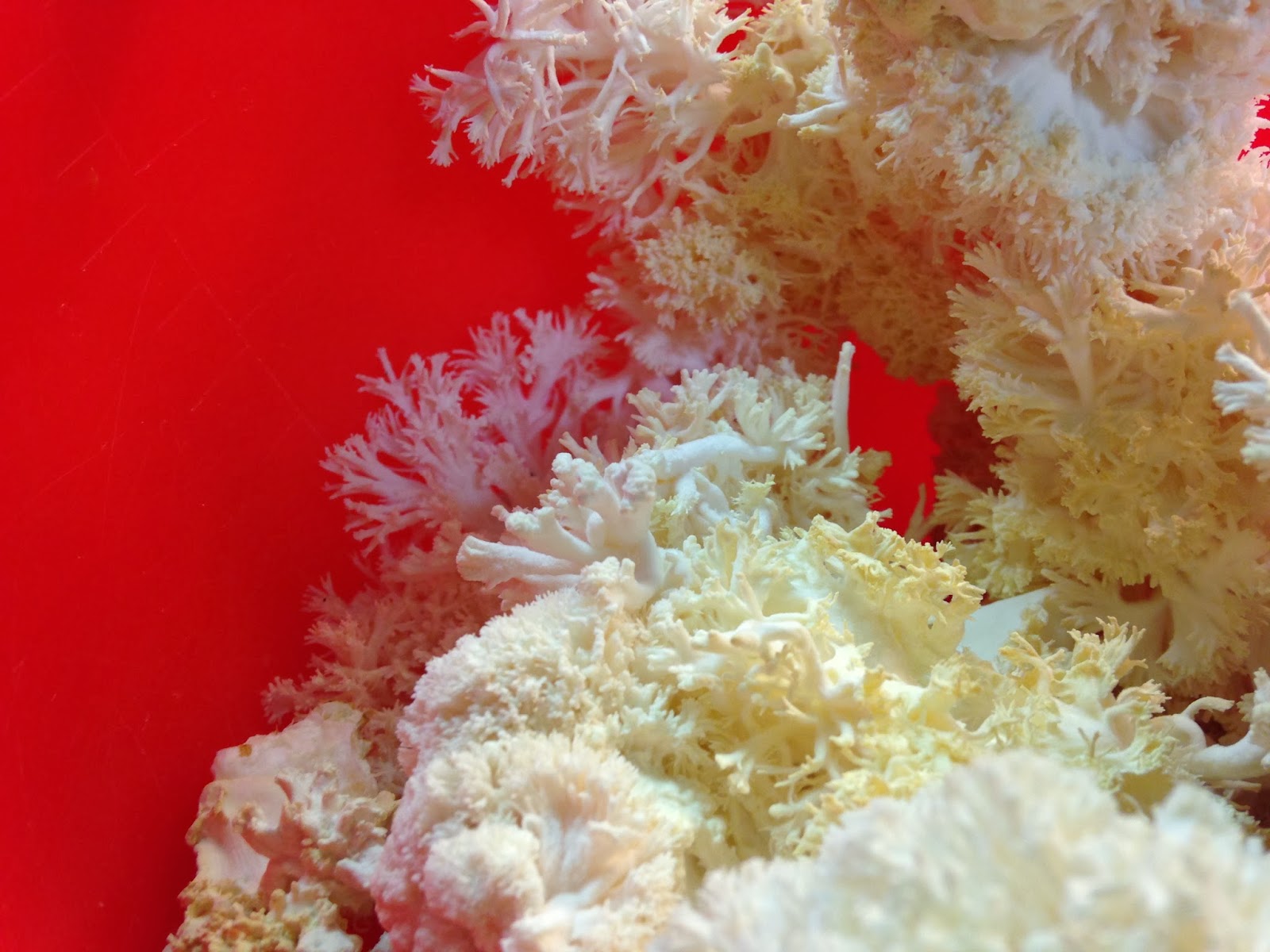
Lions Mane Mushrooms

,
A few years ago, I became interested in mushroom cultivation.  Ive grown oyster mushrooms in the past, and I just harvested some Lions Mane mushrooms that I got for the holidays.  Ive heard some pretty cool things about these mushrooms.  Apparently they can increase you memory and mood.  Paul Stamets is a mushroom expert with some interesting thoughts about Lions Mane.  You may have seen his TED talk, 6 Ways Mushrooms Can Save The World.


I saw Paul give a talk about mushrooms at Burning Man this past year.  The talk was very interesting, and one of the things he mentioned was that Lions Mane promotes growth of cells in the brain.  He also mentioned that they taste like lobster when sauteed with butter.  I had to give it a try! 

I prepared the grow kit around December 27th, and I made a mushroom fruiting box a few days later.  The fruiting box is a large clear bin with holes drilled in it, and moist perlite at the bottom.  This keeps the humidity high so that I dont have to mist the bag as often.  I still fan out the box once or twice a day.


From Jan 15th-ish?


 I harvested on Jan 20th


I sauteed them up with some red onions and butter, and a little salt and pepper.  They were pretty tasty, though not my favorite.  I am excited to harvest another flush in a few weeks, and hopefully I can prepare the next batch a little better, and theyll taste more like lobster!


Heres Pauls website where I got the kit:

http://www.fungi.com/shop/mushroom-kits/indoor-mushroom-kits.html


Read more
 

Aquaponics Build Copyright © 2016 -- Powered by Blogger