Tampilkan postingan dengan label gardening. Tampilkan semua postingan

Selasa, 28 Juni 2016

An open letter to Amateur Gardening magazine

,
Today it has been brought to my attention that Amateur Gardening magazine are about to publish a piece about my previous blog post, #shoutyhalfhour. Although I am pleased that the post is out there in the public eye and that people are obviously reading it and it is a talking point, the piece is possibly the laziest piece of journalism I have seen in a while. Firstly I need to point out that they have done nothing illegal by using quotes from the piece but what they have done is remove it from its context and so it looks as though all I am doing is criticizing when in fact the point of the post was to explain why and how the #shoutyhalfhour hashtag came about in the first place and why it has carried on.
I am not going to bang on about the piece, but I do wish to make some things clear. Yes I am a self confessed plant nut, but I am also a horticultural professional with many years experience as a nurserywoman, working on many wonderful projects which, I am lucky to say, have involved growing gardens for designers at RHS Chelsea and Hampton Court as well as many large, well known projects, including providing the plants for the Royal Wedding.
Equally yes, I am a Garden Blogger, but one from a professional horticultural background, and with concern for the industry that I am writing from within. An industry that is struggling to survive and to recruit young people into it, and one which deserves recognition and help from the garden media rather than reading sensationalisation of a blog post. I wonder how many Amateur Gardening readers are aware of the struggle of the trade and the fight many nursery people have every year to keep themselves afloat, whilst passionately believing in what they do. Or are aware of the quantity of plants that are bought in every year from abroad by the DIY superstores, whos pile them high and sell them cheap policies are killing anyone who has been a bedding specialist.
And finally, the post is not a scathing attack as Amateur Gardening have said in their piece, but is a well thought out piece of writing and if Amateur Gardening magazine had really done their homework they would have seen that Monty Don has posted a comment on the blog, in which he argues several points but says it is written "elegantly and with perceptive wit". Im pretty sure the presenter would not have commented if it had just been a rant, or aimed at him.
If Amateur Gardening Magazine have anything further to add to this, my email address is on my website, which is www.thephysicgarden.co.uk, rather than here, my blog, and I look forward to hearing from them. Sadly I assume that is unlikely.
Finally a word to all garden writers out there. Whether a professional or an amateur, writing should be excited, passionate and inspiring, whatever it is you are writing about. Writing should be from the heart and every time you post or publish something you should feel that you are putting yourself out there. Never hold back because it is that kind of passionate writing, be it in blog, book or magazine form, that the horticultural industry in this country needs from you and will inspire new and old gardeners alike to rethink their own passion for gardening and plants and why they feel that way about what they do.


Read more

How to Choose Plants for Container Gardening

,
Though you can grow any type of plant in containers (provided you have given the proper growing condition), it is always a good idea to start with the container friendly varieties. While choosing transplants ask for those which are container friendly. If you are growing from seeds; look out for words like bush type, dwarf, container friendly etc. In the seed packet.

Before choosing any plant you need to consider the placements of those containers. If you have planned it for indoor gardening then not all plants would be ideal. Here is a list of top indoor gardening plants which you might wanna try. Whereas if you are putting those in a place where they will receive ample sunlight the range is much broader. Here are some of the options which generally goes pretty well with the containers:

Growing vegetables is probably the most popular form of container gardening. It gives you fruits and veggies at your convenience. Veggies such as Tomato, Okra, Spinach or Onion can grow really well.

Herbs is a very good choice for planting in containers. They are good aesthetically and also easy to grow and can be a great substitute for vegetables. You can definitely try your hands on Oregano, Thyme, Cilantro etc.

The next choice can be Perennials. There are many reason to grow perennials in the first place. They can be like herbs or fruit bearing or can be just simply woody.

Last but not the least you can try your hands on bulbs and rhizomes like ginger.

Type of containers:
Depending upon your plants variety you need to choose the containers accordingly. For instance plants which are perennials or shrubs or some big plants like tomatoes you need to choose larger pots. There are various types of pots available in the market. A rule of thumb is that the container should not be less than 12 inch depth and 8 inch wide. Sometimes you have to switch to larger pots.
Make sure the containers have drainage hole at the bottom.

Potting mix:
You can buy them from any nursery store nearby or you can make your own. Here is a list of different growth media which you can try. It is always beneficial to add compost with the potting mix.

Type of compost: 
You can choose to prepare it by yourself or you can also opt for the commercial one. Once you have decided on the type one option is to mix a good amount of it with the soil mix at the time of planting or you can also plan to fertilize it once it starts growing rapidly.

Taking care of your plants:
you need to add slow-release fertilizer from time to time depending on the the type of plant you have planted. Fruit bearing plants require a lot more nutrients and water than the rest of the plants. So take that into consideration.


How do you find the article? Share your thoughts with us:

Read more

Sabtu, 25 Juni 2016

The Beginning of a Food Growing Revolution

,
As those of you who follow me on Twitter or on Facebook will know, growing food is my absolute passion. Its something I do because its just a part of who I am and one of the things I am lucky to not only do myself, but also teach other people to do, hopefully infecting them with the same excitement it has for me.

The Incredible Edible movement has always been of fascination to me, mainly due to the fact that it not only aims for the areas that link into its ethos to grow within the public sphere but also because it brings different communities together to work on projects and so makes new communities. Often growing anything in the urban landscape is beyond the realms of possibility for many, let alone the idea of growing food, and yet places such as the amazing Todmorden in West Yorkshire have made it possible to do just that, whilst creating communities of people whilst they are gardening.

So when I tweeted last week asking why there was no Incredible Edible Bristol and would anyone be interested I wasnt that surprised to hear people saying they were definitely interested. Bristol is a city of food growing people. Many of them are allotment gardeners but equally there are a myriad of food growing projects that rely on communities to support them and help them with their growing. However, often these are hidden way and not that well publicised and so unless youre looking for a project to work with you may not realise they are there. The city farms all have amazing growing projects and there are several great community allotments and orchards. Incredible Edible Bristol wants to bring the wonderous nature of these projects together to bring food growing to the streets and to the people. We aim to be completely inclusive, to create links between the growing groups, to grow food in and on any spare land we can find both in the city centre and in every area of the city and to give people a learning expereince so that they can go away having learned how to put the idea of growing into practice for themselves.

The scary facts are that Britain is never more than 3 days away from a food crisis and that, mixed with the facts that there are people relying on food banks up and down the country and that often people dont know how to deal with fresh produce and so are slightly put off by it, are terrifying. We rely on a chain of delivery that could fall apart easily as was seen when the fuel tanker drivers went on strike only a few years ago. By creating this project people can take back the responsibility of food production, stop being reliant on the huge supermarkets who are far more interested in their profits than they are in the state of the nations health and know how and where the food on their tables was produced.

So people of Bristol, "if you eat, youre in"
Read more

Kamis, 23 Juni 2016

Notes from Paul Stamets Talk in Philadelphia on May 2nd

,

Paul Stamets
The Wagner Free Science Institute
2 May 2014


Paul’s Hat
  • Fomes fomentarius (a Hoof Polypore mushroom) aka Tinder mushroom – used to make Amadou (a spongy, flammable substance)
  • Critical to our survival – used to carry fire
  • Boil the Mushroom, it delaminates and is very flamable
  • Hypocrates used as a medicine - A styptic (also spelled stiptic) is a specific type of antihemorrhagic agent that works by contracting tissue to seal injured blood vessels. Styptic pencils containastringents.


Article – They’re All Part Fungus - http://www.phschool.com/science/science_news/articles/they_part_fungus.html

Mycorrhizal Symbiosis book - http://www.amazon.com/Mycorrhizal-Symbiosis-Third-Edition-Sally/dp/0123705266

“Habitats have immune systems and mycelium is essential to communication.” (Paraphrazed)

Convince timber industry to chop and mulch rather than burn
  • Produces faster growing trees
  • Stores carbon rather than releasing it

Mushroom cultivation variables
  • CO2 exposure determines length of stem
  • Light exposure determines width of the cap

A Human foot covers ~ 300 miles of mycelium (may be inaccurate, I didn’t catch the number)

Small voids between strands of mycelium hold water.  As the voids lose water, micro communities of bacteria grow in the voids and help mushrooms.

Ratio of bacteria cells to human cells in the body:  100 to 1

Epigenesis – the ability to adapt with a network design

Japanese Slime mold experiment – Atsushi Tero et al. 2010
  • Subway design optimization using slime mold

“Pairing with fungi during extinction events increases chances of survival.” (Paraphrazed)

Prototaxites – 30 foot tall giant mushroom that towered over all vegetation on earth in a time when no vegetation reached above ~2 feet.  Fossil of prototaxites was found in Saudi Arabia?  (https://www.youtube.com/watch?v=XI5frPV58tY#t=362)


Honey Mushroom - Armillaria
  • parasitic, kills trees
  • can create huge swirl patterns in trees

Mycellium is the immune system of the mushroom

Network structure creates resiliency

Enokitake Mushrooms
  • Farmers growing these mushrooms showed significantly lower cancer rates


 Slide taken from Pauls presentation

Lion’s Mane Mushroom - Hericium erinaceus
  • Contain Nerve Growth Factors that promote nerve cell growth
  • Improving effects of the mushroom Yamabushitake (Hericium erinaceus) on mild cognitive impairment: a double-blind placebo-controlled clinical trial.
    • By Mori K1, Inatomi S, Ouchi K, Azumi Y, Tuchida T.
    • http://www.ncbi.nlm.nih.gov/pubmed/18844328
  • Effects of Hericium erinaceus on amyloid ?(25-35) peptide-induced learning and memory deficits in mice.
    • By Mori K1, Obara Y, Moriya T, Inatomi S, Nakahata N.
    • http://www.ncbi.nlm.nih.gov/pubmed/21383512
    • Mice given amyloid plaque causing polypeptide
      • Control mice react to new object, mice with amyloid plaques lose curiosity and problem-solving ability (navigating a maze)
      • After ~21 days eating Lion’s Mane, the mice regained curiosity and maze-solving ability

Shiitake - Lentinula edodes
  • Drying shiitake produces Vitamin D in mushroom
  • UVB exposure skyrockets Vitamin D
  • Dried Shiitake can produce Vitamin D and store it for years
    • Control: 40 IU/mg
    • Sunlight 10 hours: 46000 IU/mg
    • UVB 14 hours: 267000 IU/mg
Stropharia - Wine Cap Mushroom - Garden Giant Mushroom
  • Grows slowly in lab, quickly in soil / wood chips
  • Inoculated swales with garden giant mushrooms
    • Reduced e. coli in soil / water
  • Mycofiltration / Mycoremediation
  • Mycototoes – Woodchips, straw, water in large bin (with cracks for drainage)
    • Ferment for 2 weeks (stinky, anaerobic)
    • Drain
    • Oxygen sterilizes anaerobic bacteria
    • Mushrooms grow super fast
    • https://www.youtube.com/watch?v=SSKQyMFw8GM
    • 500 lb mycelium produces 100 lbs of mushrooms
    • Mycototes make huge mushrooms
    • Rain garden design to filter e. coli water with stropharia
      • http://www.fungi.com/blog/items/mycofiltration-for-urban-storm-water-treatment-receives-epa-research-and-development-funding.html
    • Oregon street cleaning project to clean storm water

Mycoremediation of oil spills
  • Hemp bags, filled with grasses, fermented in salt water will grow mushrooms
    • Used to corral oil slicks and break down hydrocarbons

Chaga (Inonotus obliquus) – Dangerous to environment when harvested commercially

Stamets model for permaculture – in “Growing Gourmet” book by Paul stamets

Agarikon - Laricifomes officinalis - endorheic mycorrhizal fungi - Nicknamed “elixir of life”
  • Contains compounds effective against various flu/pox virus strains
  • Doesn’t Rot, rather petrifies the supporting tree branch with calcium oxalate
  • https://www.youtube.com/watch?v=XI5frPV58tY#t=691
  • Anti-tuberculosis / anti-microbial properties
  • Google: “Small Pox Stamets”


73% of Anti-cancer drugs come from natural sources

Worst Cancer – Merkel Cell Carcinoma
  • “Nghiem Hypothesis”  - Dr. Paul Nghiem MD, PhD

Turkey Tail Mushroom (Trametes versicolor)
  • Effective in studies against Breast Cancer
  • Seem to de-cloak tumor cells from the body’s immune system
Read more

Sabtu, 18 Juni 2016

Water The Most Important but Negelected Factor in your Gardening

,


Water or H2O is one of the factors in absence of which your gardening dream will never fulfill. Though every gardener knows the importance of water, not every one of us are aware of the different techniques which if followed, can maximize the impact of water to your gardening. This blog focuses on some of those points.

The quantity of water in the soil is very important to the plants. Too little or too much watering both can be detrimental. As for the beginners, plants prepare food by using water, sunlight and Carbon Di-oxide(CO2) with the help of Chlorophyll(which is present in huge quantity in the leaves). This process is called Photosynthesis. Now with out water the plant can not complete the process and thus dies out. In case you put too much water the over wet soil can damage the roots, and can also become prone the many diseases and growth of many fungi.


So now the most important question: How much and how often should I water? Well, the best answer is its depends on your judgement. 

Just do a soil test. Pick up a little amount of soil and try to make a ball out of it. If it crumbles in your hand that means it needs water quickly. If you are able to form a ball with the soil, without making you fingers stained,then that means the soil has the perfect amount of moisture. In case your are able to form a ball, but your fingers become wet that means the water content in the soil is high and no need of further watering. 

How often you need to water the plants depends on the climate your plants are in. If the climate is warm and the plants are in direct sunlight you might have to water them very frequently. Likewise in rainy seasons(check out my blog on gardening in the Rain for more details) the watering needs are very less. Type of soil is also an important factor in watering. Soil less media such as Peat moss and Coconut Coir does not require that much water which is required in normal soil. Last but not the least watering also depends hugely on the type of plant. If the plant is fruit bearing one, or have shallow root system you need to water much more frequently than the rest of the plants in your garden.

Morning is the best time for watering your plants. It allows the plant to take up the water and get ready for the heat or the dampness of the day. It also helps the plants to fully utilize the water for their food preparation. The next best option is in the evenings, just make sure you put the water to the roots only. If the stem and the leaves stays wet during night can invite many diseases such as mildew and molds. Try to avoid watering in mid-days as it can be wasteful. Due to the increased heat, moisture evaporates from the soil before the roots can absorb it. But never stop giving water to the plant in the mid-day even after seeing the soil is dry, just because it is not the optimal time for watering.

While watering make sure you water thoroughly once a week making your soil well moistened rather than a brief sprinkle every day. Always give water to the roots i.e, at the base of the plant rather than giving the whole plant a shower(Dont take the picture above too seriously).

People spend lots of time and money on landscaping, and other garden related activities but rarely spend much time on watering which at times results in death of so many plants in the garden. If we take a little effort and apply common sense, 75% of the plant’s death in the garden due to lack  of proper watering system, can be prevented. 

Enjoy Gardening. 

Please let me know what do you think about the article by commenting bellow.
Read more

Jumat, 10 Juni 2016

Indoor Gardening Part I

,


All most all of the topics we have discussed earlier is on Outdoor gardening. This is our first initiative towards indoor gardening.  We are hopeful that you will like this as well. If you have any suggestions please put them in the comment box.

Now a day’s most of us live in apartments where there is no extra space or even balconies to practice gardening outdoor. So the only choice we are left with to do it indoor. Even if you have outdoor gardens, adding some plants indoor will definitely add a sense of life to your house. Though it is true you can not grow all the plants indoor, but there are so many of them which you can try your hands on.

But before planting indoors, you really need to understand the light condition in your room. Most of the plants requires direct sunlight (check out our earlier article about sunlight and its impact on plantation: SUN OR NO SUN) but the amount of can vary tremendously from plant to plant. Some plants even can thrive in absence of direct sunlight. But how much light is the least requirement for growing a plant? There is a saying that if you cannot read a book due to darkness the place is also not suitable for growing a plant.

So before start planting indoors, you need to first understand about some geography. If your room is south facing; you will receive the maximum amount of direct sunlight. Whereas if your room is north facing you will receive bright light but the chances are that there will be lack of direct sunlight. East and west facing rooms receives morning and evening sunlight respectively. Now according to your room position choose the plant which is best for the location.

You also need to select the variety of the plant carefully, unlike outdoor gardening; the growing space inside a house can be limited. Some plants can be toxic if ingested. So in case you have pets or toddlers it is sensible to avoid those plants. Some plants have sharp edged leaves which can hurt so if you have already decide to plant those pick a spot where there will be very less traffic.

Use the soil mix which can drain easily. Watering your indoor plants can be very tricky. As there are lack of direct sunlight in most of the cases the last thing you can do is to drown them in water. There is no hard and fast rule for this. But the plants which stay in direct sunlight will require frequent watering than those which are not. You have to experiment a bit to find a proper watering schedule.

Some indoor plants require much more humidity than others; these plants are a good choice to place in the bathrooms.

One of the important parts of practicing good indoor gardening is to prune regularly to keep it in proper shape. We have discussed a bit of pruning in our article about Bonsai. If you want to know more click hereto check the article.

We will discuss more in our following articles about indoor gardening and other gardening related activities. Please let us know what you think about this article. Your constant feedback keeps us going.


Like the article? Why not share with your friends:
Read more

Kamis, 09 Juni 2016

What is Perlite A Brief Idea About Perlite Uses in Gardening and Horticulture

,

What is Perlite?

Perlite is a generic term for naturally occurring siliceous amorphic volcanic rock. But unlike other volcanic glasses it expands from 4 to 20 times of its original volume when heated above a point(800-900 deg C). Perlite is mostly made of silica or SiO2(about 70-75%). The rest is the mixture of Aluminum Oxide or Al2O3, and Oxides of Sodium, Potassium, Iron, Magnesium and Calcium. 3-5& moisture are also present in Perlite.

Perlite is mined through out the world. Countries like Greece, USA, China and Turkey are the fore runners in this.

When perlite is heated above 900 deg C the moisture trapped inside the rock vaporized and escapes and causes the huge expansion of the material. After the expansion the bulk density of the perlite reduces significantly(0.03-0.15gm/cm3). The expansion also creates the most distinguishing feature of perlite its white color. While the unexpanded perlite rock may range from transparent light grey to glossy black, the expanded perlite ranges from snow white to greyish white.

what is perlite

Perlite Uses:

Because of its low density and low price, perlite has many commercial applications. Among which main uses are building and constructions uses, horticultural uses, fillers and filter aids. 


In gardening and horticulture, perlite is used for number of reasons. 

Advantages of Perlite soil in gardening and horticulture:

Perlite encourages quicker germination than any other growing media with quick seedling growth. It can be used by mixing with peat moss or coconut coir and used as a potting mix or it can be used solely provided it kept wet all the time.

Perlite is inorganic, inert and sterile and naturally contains the different minerals which are essential for the growth of the plant. Being inorganic it is free from weeds, diseases and pests.

Perlite is non-toxic and there are very few fire hazards. 

Unlike peat moss, perlite does not decompose very easily(if at all) so you can store and use perlite for many years.

It improves aeration and drainage of the soil mix if mixed with other growth media, or soil.
Perlite are almost pH neutral. So it can also help to reduce acidity of the soil.

Disadvantages of perlite soil:

There are couple of disadvantages also of using perlite as growth media.

Perlite holds water by having a large surface area and within the nooks and cervices of vast pores. But being porous and made of volcanic glass it allows the excess water to drain away much quickly than any other media. So in case you have really thirsty plants, investing in perlite might not be a good choice. 

Perlite is a non-renewable resource. Which means you can not increase its availability as per your likings as in case with coconut coir. 


Other Perlite Uses:

Perlite as an excellent filtering agent. Beside horticulture, Perlite filters are used in many places to filter beer before getting bottled. 


Buy Organic Perlite | Best Deals On Perlite

Read more

Rabu, 08 Juni 2016

Weekend Gardening Projects

,

An Herb Spiral in Germany

This weekend was beautiful here in New Jersey and Delaware.  I finally had the opportunity to start work on my garden projects.  I recently bought a Big Bag Bed raised bed, inspired by this youtube video from John from GrowingYourGreens.com.  It’s a pre-made raised bed made from durable cloth, which allows greater drainage than a normal raised bed, and induces air pruning of the roots, which should help growth.  I also convinced my landlord, who lives on the first floor, to buy 2 of these Big Bag Beds and let me help him with his own garden.  I was hoping to fill the beds on Saturday, but I couldn’t find coco coir anywhere around me.  I tried Home Depot, Lowes, and two local garden centers, and called a bunch more.  Everyone had peat moss, but no one had coco coir.  Peat moss is extremely harmful to the environment to harvest and is very unsustainable.  I refuse to use it if at all possible. 

So, I ordered some coco coir and Azomite Rock Dust on Amazon, which should arrive tomorrow, and then I’ll fill the beds.  I also need to get either seeds or plants to put in the bed.

My Plan is to loosely follow this design.

On Sunday, I went to Delaware to work on some projects at my parent’s house.  I’m building an herb spiral with a small pond, according to the plans here:

Herb spiral in progress.  Itll have a sprinkler system to water the garden from the water in the little pond.

My dad and girlfriend helped out, and we got the pond hole dug, and some decorative bricks laid down to mark out the garden.  We also started filling it in, but we’ll need more stones to complete the garden on a future weekend.

The coldframe

My dad had saved an old window that he got through his work, and build a cold frame.  Since it’s not that cold out now, I was planning to use this to start some seeds, for now.

Starting some seeds

I asked my girlfriend to start some seeds that I had with some of our kitchen compost and garden soil mix, and we seeded some tomatoes, lettuce, kale, spinach, strawberries, basil, and arugula.  I’m not sure if it’s too early or late to start seeds, or if I’m doing it right, but I’m just going to go for it.

Im starting with just the IBC tote, and once its running well Ill add the 50 gallon stock tank as an additional grow bed.

IBC Tote aquaponic garden

The last thing that we worked on was the IBC tote aquaponic setup that I obtained last Fall.  It’ll sit in a small dirt patch and in the winter we’ll build a thin but tall greenhouse frame from PVC to shelter the setup.  I still need a threaded PVC connector and to set up the bell siphon before it’s ready, but most of the plumbing and the pump are ready.  I’m also getting an inline hose water filter tomorrow so that I can filter the water that I fill it with.  Hopefully within the next month this will be pumping water and holding fish!

It was a busy day, but the beautiful weather kept everyone’s spirits high.  Happy Easter!
Read more

Minggu, 05 Juni 2016

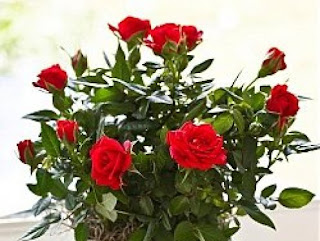
Rose Gardening

,

Rose is one of my favorite flower, and many of you might also agree with me. But many of us had felt the difficulty in cultivating roses earlier in gardening endeavor. But as per the experts roses are one of the most resilient plants you can put into landscaping. This article will put some of the techniques which will definitely increase your success rate.


There are many varieties of plants available before planting choose the variety which is the most suitable for your local climate. For this you can check your local nurseries.

The pH range ideal for roses is between 5.5 to 7. In case the soil is more acidic you can add lime stones to bring it to this level. If the soil level is less acidic try mixing peat moss or growing media to make it to that level.

Roses need minimum 5 to 6 hours of direct sunlight. So plant them accordingly. Lack of sunlight will weaken your plant.

At the time of transplanting you need to dig a big hole(at about 15 inch wide). Add compost. It is very important not to crowd your rose plant.

Roses requires plenty of water. So water regularly and make sure they don’t die out of thirst. Don’t sprinkle the water. It can cause the water to stay in the outer soil only and will not reach the main root which is deep in the soil. Sprinkling of water can also cause fungal growth. Also make sure that the water drains really well. Too wet soil can also be very harmful. For more information on watering read my early blog water the important but neglected factor in gardening.
You can also use mulch to prevent the water loss specially during summer.

Unlike some other plants discussed earlier, roses need good amount of feeding. So regularly add nutrients in the form of organic fertilizers. At the beginning of a summer season add some Epsom salt. This will boost the magnesium and sulfur needs of the the plant.

Pruning is very important for Roses. Cut out any dead branches and weak sub branches. Make sure air can flow freely through the plant. It will also help the plant look much more aesthetically good than a crazy mess of branches. Pruning always help to bring back strength to the main branches of the plant.

In case you are growing roses in the container, fertilizing becomes very important. As the roots of the plant cannot reach further into the soil in search of food you need to provide them regularly. But be aware of over-fertilizing. It causes the plants to yield lesser flower sometimes with root injury can actually kill the plant. One of the best option in this dilemma is to provide slow releasing fertilizers.


A word of caution: rose plants have thorn in them. So while pruning or any other activities wear gloves and eye glasses to protect yourself.


Do you want to add any other point? please mention it in the comment below.


Complete Rose Plant Care, 100% Quality Guaranteed, for Healthy Beautiful Flowering and Sturdy Plant 1Kg
Read more
 

Aquaponics Build Copyright © 2016 -- Powered by Blogger