Tampilkan postingan dengan label growth. Tampilkan semua postingan

Selasa, 07 Juni 2016

Low pH in the apartment system but growth is good

,
I checked out the system this week, and it seems to be doing well.  The brown algae in the water is slowly disappearing.  The veggies are growing well, though the strawberry seeds that I scattered in one pot don’t seem to be growing too quickly.  My friend hadn’t checked the chemicals recently, so I did while I was there.  The pH was very low (<6), but everything else looked ok.  The ammonia was 0.5ppm.  Nitrite was zero, and Nitrate was 160+ ppm.


I added 6 capfuls of API’s pH up.  I decided that I didn’t want to rely on my friend checking the pH and adjusting, so I added enough pH up to bump up the pH to around 7.  Normally I wouldn’t want to raise it more than 0.2 per day, but I didn’t want to risk losing the bacteria and have to re-cycle the system.  My friend added a little water the next day, and checked the pH.  It was about 7 – 7.2, which is ideal.  Hopefully this weekend I can visit for a few hours to clean the canister filter, and plan out new fish that we want to put in the fish tank.  We’d also like to mount some small lights that we have onto chains above the grow bed.  Another issue is that the water draining is somewhat loud, so I want to figure out a way to muffle the draining water.  Here’s some pictures and a video from my visit to the system.


Read more

Rabu, 25 Mei 2016

Pros and Cons of Different System Types

,
Commercial Aquaponics


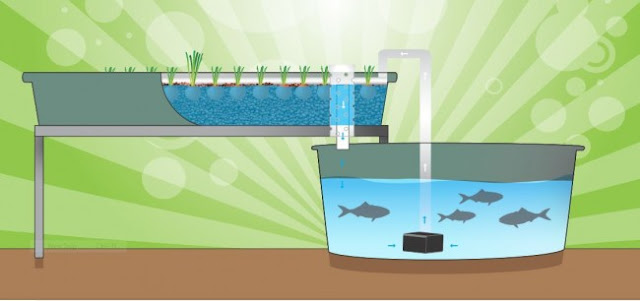
Ive been trying to compare the pros and cons of different types of aquaponic systems recently.  Right now, Im working on constructing a 105 gallon setup at my friends apartment.  Were making a simple flood and drain system, with a 50 gallon grow bed.  Filling that grow bed will require almost 200 Liters of expanded clay or some other media.  All that media is going to double the cost of our system.  We were thinking about alternative methods, such as expanded shale or even something like legos (but we dont have nearly 50 Gallons of legos).  The cost of buying a grow media for a large grow bed is so high, that it really got me thinking about alternative systems.  Heres a list of pros and cons of various aquaponic systems.  If you know anything that I havent listed, please leave a comment and Ill add it to my list and credit you.


Media Bed Systems
Chift Pist, Simple Flood and Drain (Ebb and Flow), Constant Flood (Continuous Flow)
Pros
· Self Cleaning - The grow media filters out the fish waste
· A media bed performs three (3) filtering functions:
    · mechanical (solids removal)
    · mineralization (solids breakdown and return to the water) 
    · bio-filtration
· Media provides better plant support and is more closely related to traditional soil gardening because there is a media to plant into

Cons
· Expensive growing media

A Typical Media Bed


Chift Pist
Pros
· Pump is in sump tank away from fish and wastes
· Water level in fish tank remains constant
· Great if you have a tall fish tank
· Larger water volume because of sump
Cons
· Extra equipment required (sump tank)
· Must have tall fish tank or stand
· Can take up larger footprint

Chift Pist system


Simple Flood and Drain / Ebb and Flow
Pros
· The grow bed can be separated from the fish reservoir
· Simple design - Only two major system components - lower cost
· It is easy to understand and learn
· Great if you have a tall fish tank
Cons
· Requires a timer or bell syphon
· Pump is in fish tank, exposed to fish and waste
· Water level in tank fluctuates a little


Simple Flood and Drain system


Constant Flood / Continuous Flow
Pros
· Same as the Simple Flood and Drain, except when you remove the timer, the system is constantly flooding
Cons
· Pump is in fish tank
· Plant roots can become waterlogged, and areas of the grow bed can become stagnant and anaerobic as the flow of fresh water through the bed moves around any blockages


Constant Flood system


Deep Water Culture (DWC)
Pros
· Resistant against water temperature and pH fluctuations
· Excellent root development due to easy access to oxygen
· There is plenty of surface area for the beneficial bacteria to grow
· Very good for lettuces and leafy vegetables – used extensively by commercial farmers
Cons
· Requires additional filtration to remove solids
· Large plants such as tomatoes, cucumbers, etc. can be difficult, if not impossible, to support


Deep Water Culture system


Nutrient Film Technique (NFT)
Pros
· Both components (fish and plants) may be decoupled from each other whenever required and can/do operate independently of each other if required.  I believe this is important in a commercial situation because it allows fish or plant production to continue when and if there are any problems with the other component
Cons
· Water susceptible to temperature fluctuations
· Requires additional filtration to remove solids
· Roots that die and detach from plants can cause blockages in water flow
· NFT is only really suitable for certain types of plants, generally leafy green vegetables, larger plants will have root systems that are too big and invasive, or they become too heavy for the lightweight growing gutters

Nutrient Film Technique system


Sources:
  • http://www.backyardaquaponics.com/guide-to-aquaponics/running-system/
  • http://myownaquaponics.com/home-2/get-started/
  • http://aquaponicgardening.com/wp-content/uploads/2011/08/Aquaponic-Gardening-Rules-of-Thumb.pdf
  • http://affnan-aquaponics.blogspot.com/2010/12/conceptual-3d-rendering-of-aquaponics.html
  • http://www.kijanigrows.com/
  • http://globalaquaponics.wordpress.com/tag/commercial-aquaponics/
  • http://aquaponicsusa.wordpress.com/2011/12/13/watch-our-humble-seed-lettuce-thrive/
  • Comments on reddit that corrected my mistakes:  http://redd.it/1d18i8

Read more

Selasa, 24 Mei 2016

New Growth in my Windowfarm!

,
I was pleasantly surprised to see my strawberry plant flowering yesterday!


Im also seeing some growth in the Basil planted in the windowfarm.


The green onions are doing really well, and I cut one to mix with my eggs for breakfast this morning.  This marks the first time Ive eaten anything that Ive grown.  Awesome!


The lavender on my windowsill is also starting to grow.


My little garden is coming to life!  My betta, Tarzan, is happy!  Our frog Henri is happy!  Our cat, Alex, is happy!  And, Im super happy!


Read more

Senin, 09 Mei 2016

CCRES ALTERNATIVE ENERGY

,
 
CROATIAN CENTER of RENEWABLE ENERGY SOURCES
 (CCRES)

Alternative Energy
 
Energy has become integral parts of our day-to-day lives. Energy is required to produce electricity for domestic and industrial applications. We need energy to drive our vehicles, to run the machines, keep our houses cool and hot, run the computers and mobiles, and for a number of other purposes.

Comparison of Traditional and Alternative Energy Sources:

Traditionally we have been using fossil fuels for production of electric power and driving our vehicles. The fuels used for the generation of electric power are fossil fuels like coal and oil, and nuclear fuels like uranium. The fuels used commonly for running the vehicles are crude oils like gasoline and diesel. Alternative energy refers to the energy that is not dependent on fossil fuels, crude oil and nuclear fuels. Alternative energy, also called as renewable energy, is obtained from various sources like radiations of the sun (solar energy), wind, water, geothermal heat and tides in the oceans. Burning of fossil fuels is one of the major causes of environmental pollution and greenhouse effect. They release lots of carbon dioxide and particulate matter. The alternative or renewable energy is considered to be the clean energy since extracting energy from its sources does not produce any pollution.

The sources of energy like fossil fuels, crude oil and nuclear fuels are also called as non-renewable sources of energy since their deposits are reducing in the nature as they are being used extensively throughout the world. Fuels like coal, natural gas and oil took millions of years to develop but once used they cannot be replaced immediately. The alternative energy on the other hand is available in abundance from various sources and they get replaced easily immediately or within short period of time.

Alternative sources of energy provide unending supply of energy. For instance the solar energy from the sun will be available for unlimited period of time till the sun keeps shining. Solar energy can be collected by the collectors and it can be used for a number of applications like cooking food, heating water, generating electricity, running the vehicles etc. Similarly, the wind will keep on blowing on the surface of the earth tills its atmosphere is in place so it can be utilized for unlimited period of time. The ability of the wind to produce motion can be utilized to run the fans of the windmill and produce electricity from them.

The tidal energy is obtained from waves of the oceans having huge quantity of water that would last forever. One of the important sources of alternative energy is hydro-power used for the generation of electricity in hydroelectric power plants. Throughout the world, the hydroelectric power plants are one of the major sources for the generation of electricity. In these plants the flow of river is blocked at certain places and water is allowed to be collected at large height in the dam. The rivers have been flowing since thousands of years and continue to exist for unlimited period of time as they are replenished by rain water from time-to-time.

Geothermal energy is obtained from the lower layers of the earth usually for producing the heating effect. Once the energy is obtained from the earth, it is replaced immediately naturally and it can be used for ending period of time interval.

Another important source of alternative energy is the biomass like waste wood, leaves of the plants, broken branches and twigs of the trees, agricultural wastes, garbage, human wastes etc. The fuels obtained from biomass are called bio-fuels. Some of the common bio-fuels are ethanol, biodiesel, and natural gas. Biodiesel is a type of alternative fuel used for running of the vehicles. It is made from renewable energy sources like plant and animal fats. Biodiesel is not a petroleum fuel, but it can be easily blended with petroleum fuel diesel in various proportions.

All the above alternative sources of energy are expected to last for long intervals of time line. While the supply of coal, oil and natural gas is expected to reduce and stop in the future, the supply of energy from sources like sun, wind, water, earth, and biomass is expected to last forever.

Consumption of alternative energy in US has been increasing over the years. In the year 2009 the consumption of alternative energy in US was 7.7 quadrillion Btu, which was 8% of all the energy used in the whole nation. Half of the alternative energy was used for producing electricity, while 10% of the total electricity produced was from alternative energy sources. Besides this alternative energy sources were also used for production of heat and steam. Alternative energy was also used for transportation, and to provide heat for homes and businesses.

Alternative energy sources reduce the pressure on fossil fuels and also help keep environment clean. The only major problem is that alternative energy is expensive compared to the fossil fuels mainly because they are located in remote places and its difficult to bring them to the main grid. Some of the sources like wind and solar are not uniform during various periods of the day and the year. However, their demand has been increasing and various technologies are being developed to utilize alternative energy sources more efficiently.
CCRES 
special thanks to   
Escapeartist, Inc
 CROATIAN CENTER of RENEWABLE ENERGY SOURCES 
(CCRES)
Read more

Kamis, 07 April 2016

Human growth hormone HGH from algae

,


Rehovot, Israel-based Rosetta Green Ltd., which specializes in crop improvement for the agriculture and alternative fuel industries using unique genes called microRNAs, has successfully completed an experiment producing human growth hormone (HGH) and validated its biological activity. Proteins produced by both treated and control algae were tested with an in vitro activity test assay by an independent third party using the conventional proliferation method. The activity test assay found that Rosetta Green’s treated algae exhibited hormonal activity.

The project is part of a joint European effort to manufacture chemicals and proteins in algae, which is implemented and funded by the European Union as part of the European Commission’s Seventh Framework Program for Research and Technology Development (FP7). More than ten European organizations are participating in this project, including companies and leading universities, which has an estimated budget of about $7 million US. The project is being managed by Professor Sammy Boussiba of the Microalgal Biotechnology Laboratory of Ben Gurion University of the Negev.
Rosetta Green focuses on using microalgae to develop and produce human proteins for therapeutics, a process that reduces the currently steep drug production costs associated with using mostly mammalian cells and bacteria.

According to Amir Avniel, Rosetta Green’s CEO, “Algae may be an effective source for the production of proteins and vaccines. Rosetta Green has vast experience working with molecular methods in algae. The company worked on the development of designated algae in order to produce the protein in cooperation with the EU. Algae can be used for multiple applications such as producing chemicals, industrial food supplements, bio fuel and food. We believe that the technology that we develop provides significant advantage to improve various traits in plants and algae. We continually seek partners to develop our products and technologies.”

Growth hormone is a peptide hormone secreted by the pituitary gland. Among its functions are the regulation of protein production and the stimulation of bone growth in children. Growth hormone is normally secreted throughout a person’s life, but the amount decreases by 14% every decade after the age of 21. A deficiency in this hormone is known to cause growth block, short stature and dwarfism.

Currently, growth hormone is produced by major multi-nationals such as Pfizer, Lilly, and Merck Serono and used as a prescription medicine to treat children with growth problems and adults with hormone deficiency as well as other symptoms characterized by growth complications. Total annual sales of human growth hormone are estimated at approximately $3 Billion US.

Growth hormone is administered today primarily through daily injections over several years. The accumulated cost can reach hundreds of thousands of dollars per child. Rosetta Green believes that manufacturing the hormone using microalgae will likely reduce today’s high cost of production, which relies upon currently available techniques. 
More info at http://www.rosettagreen.com/.

CCRES special thanks to Professor Sammy Boussiba of the Microalgal Biotechnology Laboratory of Ben Gurion University of the Negev.

CCRES ALGAE Project 
part of 
Croatian Center of Renewable Energy Sources (CCRES)
Read more

Kamis, 24 Maret 2016

Lions Mane Mushrooms

,
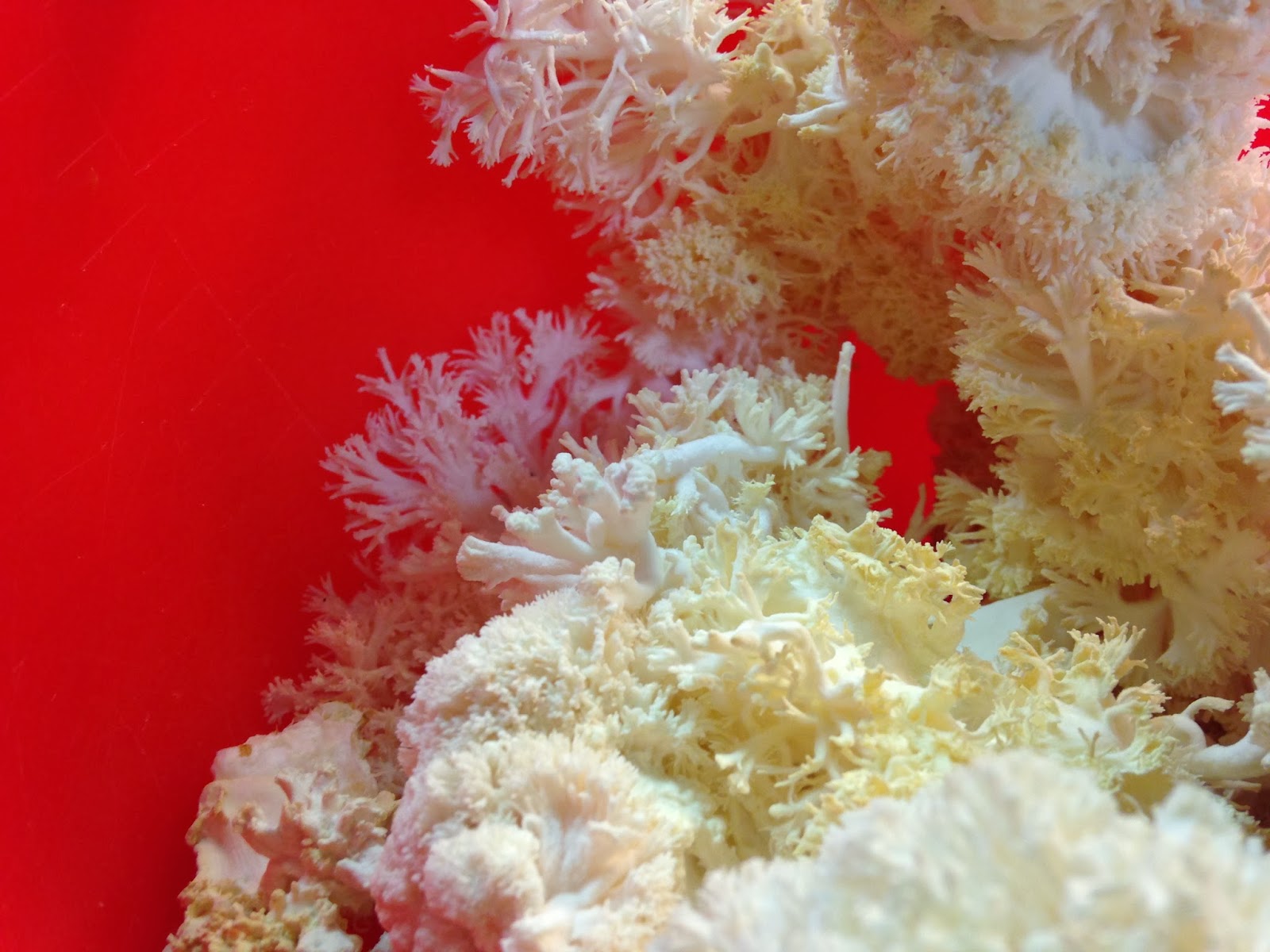
A few years ago, I became interested in mushroom cultivation.  Ive grown oyster mushrooms in the past, and I just harvested some Lions Mane mushrooms that I got for the holidays.  Ive heard some pretty cool things about these mushrooms.  Apparently they can increase you memory and mood.  Paul Stamets is a mushroom expert with some interesting thoughts about Lions Mane.  You may have seen his TED talk, 6 Ways Mushrooms Can Save The World.


I saw Paul give a talk about mushrooms at Burning Man this past year.  The talk was very interesting, and one of the things he mentioned was that Lions Mane promotes growth of cells in the brain.  He also mentioned that they taste like lobster when sauteed with butter.  I had to give it a try! 

I prepared the grow kit around December 27th, and I made a mushroom fruiting box a few days later.  The fruiting box is a large clear bin with holes drilled in it, and moist perlite at the bottom.  This keeps the humidity high so that I dont have to mist the bag as often.  I still fan out the box once or twice a day.


From Jan 15th-ish?


 I harvested on Jan 20th


I sauteed them up with some red onions and butter, and a little salt and pepper.  They were pretty tasty, though not my favorite.  I am excited to harvest another flush in a few weeks, and hopefully I can prepare the next batch a little better, and theyll taste more like lobster!


Heres Pauls website where I got the kit:

http://www.fungi.com/shop/mushroom-kits/indoor-mushroom-kits.html


Read more
 

Aquaponics Build Copyright © 2016 -- Powered by Blogger