Tampilkan postingan dengan label plants. Tampilkan semua postingan

Selasa, 28 Juni 2016

How to Choose Plants for Container Gardening

,
Though you can grow any type of plant in containers (provided you have given the proper growing condition), it is always a good idea to start with the container friendly varieties. While choosing transplants ask for those which are container friendly. If you are growing from seeds; look out for words like bush type, dwarf, container friendly etc. In the seed packet.

Before choosing any plant you need to consider the placements of those containers. If you have planned it for indoor gardening then not all plants would be ideal. Here is a list of top indoor gardening plants which you might wanna try. Whereas if you are putting those in a place where they will receive ample sunlight the range is much broader. Here are some of the options which generally goes pretty well with the containers:

Growing vegetables is probably the most popular form of container gardening. It gives you fruits and veggies at your convenience. Veggies such as Tomato, Okra, Spinach or Onion can grow really well.

Herbs is a very good choice for planting in containers. They are good aesthetically and also easy to grow and can be a great substitute for vegetables. You can definitely try your hands on Oregano, Thyme, Cilantro etc.

The next choice can be Perennials. There are many reason to grow perennials in the first place. They can be like herbs or fruit bearing or can be just simply woody.

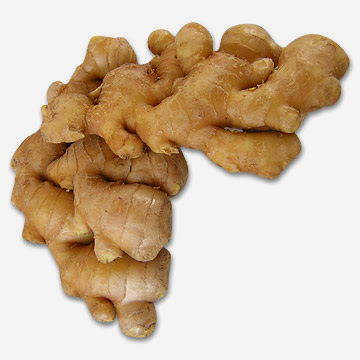
Last but not the least you can try your hands on bulbs and rhizomes like ginger.

Type of containers:
Depending upon your plants variety you need to choose the containers accordingly. For instance plants which are perennials or shrubs or some big plants like tomatoes you need to choose larger pots. There are various types of pots available in the market. A rule of thumb is that the container should not be less than 12 inch depth and 8 inch wide. Sometimes you have to switch to larger pots.
Make sure the containers have drainage hole at the bottom.

Potting mix:
You can buy them from any nursery store nearby or you can make your own. Here is a list of different growth media which you can try. It is always beneficial to add compost with the potting mix.

Type of compost: 
You can choose to prepare it by yourself or you can also opt for the commercial one. Once you have decided on the type one option is to mix a good amount of it with the soil mix at the time of planting or you can also plan to fertilize it once it starts growing rapidly.

Taking care of your plants:
you need to add slow-release fertilizer from time to time depending on the the type of plant you have planted. Fruit bearing plants require a lot more nutrients and water than the rest of the plants. So take that into consideration.


How do you find the article? Share your thoughts with us:

Read more

Sabtu, 25 Juni 2016

Top Five Companion Plants For Tomatoes

,
Here in this article we will give you some of the best choices for companion plants of tomatoes. As a companion plant they provide one or more than one of the benefits to the tomato plants like:

1.    Reduce pests
2.    Improve health and flavor
3.    Reduce diseases
4.    Help in pollination

We have discussed about the basic of companion planting in our earlier article. So if you have missed that by any chance you can find it by clicking here. There are so many plants which can act as a companion to the tomato plants but here in this article we have chosen our top five.

Marigold:
These brightly colored flowered plants are known to everybody for their pungent smell. And surely you can use them to deter pests. It is a best controller for the nematodes (More on nematodes in this article).
They produce a substance called alpha-terthienyl
which reduces the root knot nematodes in the soil. The best way to do it is to first grow the plant and at the end of the season chop and till them into the soil. Apart from nematodes, slugs, worms and other garden pests can be reduced by planting Marigold plants along with
Tomatoes.

Spinach/Lettuce:
Planting Basil, Spinach or Lettuce along with tomatoes can greatly increase the taste of tomatoes. You can also save a lot of space by planting them in union. It increases the rate of pollination for both the plants. As a “cherry on the top of the cake”, it also saves your tomato plants from whiteflies, mosquitoes, aphids etc. Being larger in size tomato plants also provide shades for these leafy vegetables.

Carrots:
As they say: “Carrots love Tomatoes”. Carrots share the space well with tomatoes. The roots of the carrot break up the soil very well. So if you have planted it along with tomatoes, the tomato plant can take nutrients, water etc very easily. It is also helpful in harvesting. Plant the carrots when the tomatoes are very tiny and they will be ready to be harvested by the time tomato plants require more space to proliferate.

Onions/Garlic:
Onions and garlic are natural deterrent of pests. This is due to their pungent odor. Planting them along with tomatoes will definitely reduce your pest management cost. They are a good option if your tomatoes are infested with spider mites. Planting garlic cloves around tomato plants is like providing a natural insecticide to the plant. 

Borage:
Borage protects tomatoes from the hornworms. Growing borage along with tomatoes can help deterring the worms and keep your tomatoes healthy. Borage also has a fresh flavor to it so you can use the smaller leaves to salads or refreshing drinks. Besides tomatoes you can also use borage as a companion plant with Cabbage to deter cabbage worms.

For more ideas about companion plants of tomatoes see the video below.


We hope you have liked the article. We look forward to your comments regarding the article. Also feel free to share this along with your friends:
Read more

Sabtu, 18 Juni 2016

The Life of Algae

,

This video from Sapphire Energy tracks the cultivation of algae from their San Diego lab in microscopic images, to petri dishes, to flasks, and then outside in their Las Cruces, NM facility and into 14?, 40?, 100? and half-acre ponds. This is the path that many thousands of strains have taken as Sapphire refines their library of commercial strains that will be used in their Green Crude Farm or Integrated Algal BioRefinery (IABR) now under construction in Columbus, NM. At the Green Crude Farm, the world’s first commercial demonstration scale algae-to-energy facility, algae will be cultivated in ponds over 2 acres in size.

CCRES SPIRULINA
 part of 
Croatian Center of Renewable Energy Sources (CCRES)
Read more

Jumat, 17 Juni 2016

Pruning Tomato plants How to prune tomato plants for maximum yield

,
Pruning tomato plants is one of the most important decisions you need to make if you want to grow tomatoes. And in this article we will give you an idea about pruning. If you are new to tomato gardening I suggest you read our earlier articles on tomato growing before reading further.


You can find the earlier article here.

Read Basic Tomato Growing Tips 

Now lets start with the basics. Pruning tomatoes can be a very simple process. Sometimes the process is also called "trimming tomato plants". You just need to find the suckers and snap them off with your two fingers (thumb and index finger).

Tomato suckers are easy to find. They grow in between the main stem and the branches. Though we call these “SUCKERS”, these are actually the branches of the plant in initial stage. If you leave them to grow they will soon become fully grown branches and grow fruits on them.

So you might be thinking if those are the branches and also give fruit why are we talking about removing them? The fact is the branches of the plant though will grow fruits; the number is far less compared to the main stem and main branches. Most of the energy which the suckers or these branches receive will go into making foliage and more branches. It will ultimately make the plant outgrow its space in the garden.

Why you should think about Pruning tomato plants :

The pruning is done so that the plant directs its energy towards producing larger fruit than to develop foliage. Though the foliage will also develop fruit also, but the overall size of the fruit through out the plant will be much smaller. Lesser foliage also reduces the pest problem and is easier to take care.

Pruning also helps the plant in receiving much more sunlight and better air circulation though out their body. Better sunlight and airflow also means more energy and lesser diseases for the plant.


Having said that, Though tomato pruning is an essential step in tomato plants care, it is not compulsory that you need to prune each tomato plant. Let us understand why:


There are basically two types of tomato plants: Determinate type and Indeterminate type. The first type will grow to a certain height and produce fruit at one go. So in that case if you remove the suckers, the fruit bearing capacity of the plant is greatly reduced. As it will not grow vertically the total fruit yield will be pretty low. In case your plant is of indeterminate type, pruning will actually help increasing the fruit quality. It will also help the plant not to get out of control and the supporting nets will be able to hold the plant.

It is best to pluck the suckers when they are very young. The younger they are, easier it is to prune. In case they got a little thicker and it becomes harder to prune with the fingers, you can use a sharp knife to cut them off. Sometimes the suckers grow so thick that it can be detrimental for the plant to remove those; in this condition it is wise to leave them as it is.

Please bear in mind that pruning tomato plants is NOT absolutely necessary. You can definitely choose not to prune and still enjoy an acceptable amount of yield. Pruning is a method of enhancing the production, resulting bigger and tastier tomatoes. it also increases the number of fruits.


What do you think about the article? Share it with your friends using the following sharing tools: 

Read more about tomatoes: 
Tomato Growing Tips
Top 8 pests of Tomatoes
Simple steps to save tomato seeds

Read more

Sabtu, 28 Mei 2016

Algae The Worlds Most Important Plants

,
Believe it or not, your life depends on algae!

Join Scripps Institutions Russell Chapman as he discusses the important roles algae have played in the development of life as we know it.


Read more

Sabtu, 21 Mei 2016

Algae Production Workshop

,


  NAA 

Announces 

Algae Production Workshop

 in NJ


The National Algae Association (NAA) has announced that they will be presenting a Commercial Algae Production Technologies and Networking Workshop, May 1, 2012, at the Crowne Plaza Fairfield Hotel in Fairfield, New Jersey. The event will include a tour of Glenn Mills to view a commercial-scale algae extraction facility.
The focus of the Workshop will be on progress in commercial growing, harvesting and extraction methods, as well as proven technologies that are ready for commercial-scale algae production. NAA is inviting industry professionals to submit proposed presentations no later than April 10, 2012 for consideration. Membership in NAA is not required to present at or attend this event.
For additional information, please contact:
National Algae Association
936.321.1125
info@nationalalgaeassociation.com

CCRES SPIRULINA
project of 
Croatian Center of Renewable Energy Sources (CCRES)
Read more

Rabu, 18 Mei 2016

Various Minerals and Their Roles in Plants Life

,


Today’s article is about various minerals which we keep mentioning in plant growth. These minerals some times required in huge quantity while some times they need only in small quantity by the plants. But never the less lack of these minerals can cause disaster as far as your gardening is concerned.

Depending upon their required amount, all the elements can be classified in two groups:

1.    Macro-nutrients:


Nitrogen (N):

Generally nitrogen is available in the soil in the form of ammonium or nitrate salts. Nitrogen plays an important role in formation of the chlorophyll in plants. It is an essential part of protein formation as all the protein which the plants synthesis will not be possible without the availability of nitrogen. Nitrogen also promotes rapid growth. You can easily trace the deficiency of nitrogen if the plant shows light green leaves, short and woody stalk and start to die.

Phosphorous (P):

Phosphorous are present in the soil in the form of phosphate salts. Phosphorous is very important for the growth of the roots in the early stages of a plant’s life. In the later stages it helps in flowering and forming seeds. Deficiency of phosphorous leads to dark pigmented leaves. If the deficiency is in the later stages of a plants life it slows down fruiting process.

Potassium (K):

Potassium is abundant in the soil in the form of different potassium salts. Like the above two this is also a very important element in plant growth. It increases the strength of the stalk and improves the quality of grain. Potassium also improves resistance capacity of the plants in hostile conditions. Lack of potassium causes dried leaves (especially at the borders), slender stalk, and leads to lesser grains in maturity.

These 3 molecules are required in large quantity compared to the other molecules and lack of these three is the major cause for inappropriate growth in most of the plant. These are generally referred to as NPK and they are also called the PRIMARY MACRO-NUTRIENTS.

Here we have not included Carbon (C), Oxygen (O2) and Hydrogen (H2) which required by the plants in large quantity but they get these from the air and water. We have focused on all the elements which the plants get from the soil.

Calcium (Ca):

Though not as highly recommended as NPK, calcium is also plays an important role in plant growth. It improves root formation in plants and plays a major role in cell division. Many diseases in plants occur in seedling stages due to lack of calcium.  Many places normally have calcium reach soil. Incase your place is not among them you can add lime to increase the calcium content of the soil. Apart from lime you can also add egg shells to increase calcium content of the soil.  

Magnesium (Mg):

Magnesium helps in chlorophyll formation of the plant. It also increases the intake of other elements from the soil and particularly helps in phosphate absorption. Lack of magnesium severely affects chlorophyll formation and results in Chlorosis. Adding dolomite can solve the Problem of magnesium deficiency.

Sulfur (S):

Sulfur plays an important role in amino acid formation. Different vitamin requires sulfur for their absorption. Sulfur can be found in the soil in the form of sulfate (So4) ions. Deficiency can cause pale green leaves and lesser growth in plants. In most of the cases, sulfur is deposited in the soil with rain water (SO2 in the air get mixed with rain).

Ca, Mg, and S though required by the plants in large quantity though the amounts are not as large as NPK. These elements are called SECONDARY MACRO-NUTRIENTS.

2.    Micro-nutrients/trace elements:

The following elements are required by the plants but in very small quantity. These are called micro-nutrients or trace elements. Though their required quantity is very small, deficiency of these can cause various problems and hinder proper development in plants.

Zinc (Zn): It plays an important role in activation of Auxin (major growth hormone) hormone and various enzymes.

Chlorine (Cl2): Have some role in phosphorous intake.

Boron (B): Plays an important role in cell division process. It also helps in transportation of carbohydrates in plants.

Molybdenum (Mo):It helps in nitrogen fixation for the plants.

Iron (Fe): Plays important role in chlorophyll formation.

Manganese (Mn): Plays an important role in germination of seeds and helps in activating different enzymes.


We will discuss every element in detail later. But I hope this has given you a basic idea on all the elements which we generally discuss in plants nutrition.
Read more

Plants Ideal for Vertical Gardening

,


We have discussed about vertical gardening in our earlier article. Here we will mention some plants which make the perfect choice for vertical gardening. These plants are some of the best which grows pretty well in vertical gardening. If you have any other plants which you think can grow well in vertical gardening please mention here. As per our choice these plants are:

Beans: 
The bush form of beans does not grow well in vertical gardening. So if you are planning to do a vertical gardening with beans, choose the pole variety. Its harvest can go for several months.  You can also provide horizontal support for them. If used properly you can prepare visually attractive structures by using bean plants.   
 
Tomatoes:
Tomatoes are a very good option for practising vertical gardening. As discussed in tomato growing tips, tomatoes require   
support such as wire cages, for growing. Cherry tomatoes are also good for growing in vertical garden. These creepers use vines which makes them ideal for growing against a wall. Just choose a place where you receive full sunlight at least for six hours.

Here are some tomato cages. You can buy them from amazon.

Cucumbers:
There are several varieties of cucumbers available in the market. Most of the varieties grow well in vertical garden. You need a strong trellis for holding the plant, as when the fruit grows larger, the pressure on the trellis will be much more than some other plants like peas or beans. Most of the time, they grow upright. Providing net or fencing material can be good choice for providing support to the plant.
 
Peas:
Choose the variety that grows vertically well. Peas are generally cool weather crop. As the fruit size is not heavy and plant tendrils are shorter in length, you can provide nets as trellis. Some varieties grow very high (such as 6 ft), so provide the trellis accordingly.

Squash:  

Generally in gardens, squash are grown along the ground. This is not a problem if you have a lot of space for gardening, but in case like most of the urban gardeners you lack space, vertical gardening can be a good choice for growing squash. It will save a lot of space and will allow the light to reach every part of the fruit. It helps to prevent the fruit from rotting and also prevent diseases which cause due to lack of proper flow of air (like mildew). Just keep in mind these fruits become very large in size so provide proper strong trellis of fencing structure for support.

Strawberry:
Strawberries do not have deep root system. So they need additional support and hold on to vertical spaces for growth. This makes them ideal for vertical gardening. You can even grow them in side a PVC pipe.

Check out this interesting article Why you should always grow strawberries in coconut coir?


There are several other option plants which you can grow in vertical gardens. Which plant do you prefer to grow share it with us.  


Dont forget to read: 
Different soilless media for growing plants
Top Five Plants for Indoor Gardening 
Read more

Selasa, 12 April 2016

How To Grow Ginger Plants Simple Tips On Growing Ginger

,
Before starting our discussion about How to grow ginger plants First we need to understand the basics. When we talk about edible part of ginger, we generally refer to ginger root. But it is the rhizomes that we eat.

It is one of the plants which need very less amount of caring and maintenance. You just need to know the basics.

How to grow ginger


How to grow Ginger?


Ginger grows well in humid climates. People living in warmer climates generally do not have problems with growing ginger. In case you are living in a drier place a bit of spraying will definitely benefit the plant. Plant your ginger where you will receive enough sunlight. As mentioned in my article Sun or No-Sun, sunlight is very important for plants of these kinds.

Watering A Ginger Plant:

how to grow gingerWater is also a crucial factor in growing ginger. Make sure the soil is moist while the active growing season of ginger is going on. To make the better use of the soil moisture and preventing it from evaporation use Mulch (Check out more about mulch and mulching by clicking the link). Adding different soil less mediawith the soil can also increase the water retention of the soil. Also try not to over-water. It will also drain out the nutrients from the soil.

Ginger is not a voracious eater. If you have added enough compost (you can find more about composting Ingredients by clicking the link) in the beginning you don’t need to add much. In case you leave in a place where the rain is plenty and your soil gets drenched many times your soil nutrition also fades away with the water. In these cases you need to add nutrients like seaweed, fish extractions or other organic manure from outside.

Harvesting Ginger Roots:

Ginger plant generally takes 8 months or more to mature. You can sense the maturity when you see the dying leaves. Many people pull out ginger earlier than this but the mature ginger always taste better.

While harvesting look out for rhizomes with buds in it, these are easier to use for replanting. While planting always put the eye side (the buds) upwards and just below the soil.

Ginger Flower:

Some varieties of Ginger flowers are exceptionally fragrant. So if you find flowers in your plant you can definitely snip them and use it in other decorative format (like bouquet). Do not worry this will not harm the health of the plant. Flowering needs at least two years. So if you are thinking about flowers you have to harvest very carefully and should only extract a few from here and there.

Ginger As A Companion Plant:

Ginger is a very good companion plant. You can club this with other plants for pest control purposes. You can find more options on different combinations in my earlier article titled Companion Planting: A basic Know-how.

  
 Are you also planting Ginger? Share your experiences with us.
Read more

Jumat, 08 April 2016

Growing Bamboo Plants How to create a bamboo garden in your backyard

,
bamboo gardenBamboo is a giant grass. The best part of growing a Bamboo plant is that it grows very fast and in every spring you should expect to see a number of branches keep emerging. In this article we will share some information about growing Bamboo plants.

Though they are happiest in slightly acidic and loamy soil, Bamboo is one of the plants which will grow in almost any soil type. Just make sure that it has a good drainage capacity and you will have a lashing bamboo garden in a very short time.  To increase the drainage capacity you can add some soil less media with your soil.

While planting, it is important to protect the bamboo plant from very hot sun especially if your plant is very small in size. Best time to plant them is in the springs. Newly planted bamboos required frequent watering. Use organic mulch to cover the area. Mulching will help in water retention, weed protection and being of organic materials it will enrich the soil. Space them not less than 5 feet if you plan to form it dense. For some species you may require to give much more space. In case you are planning to plant a taller one, use some support to hold the plant. Sometimes strong wind can damage or even uproot the plant; so be careful.

Though in most of the cases bamboo plants take nutrients from the soil itself it is better to provide some fertilizers. Use compost for fertilization but focus on the ingredients which are more enriched with nitrogen (N). If you want to know more about the composting ingredients check out our earlier article.

growing bamboo plantsIt generally takes 5 to 6 years for a bamboo plant to mature. You can really give your desired shape by little bit of pruning. Cut just above the node. Depending on the size of the branch you want to prune use a chainsaw or a simple knife. There is very little chance that you can damage the plant by pruning. So don’t be hesitant.

Some times people feel very concerned about yellowing or loss of leaves of their bamboo plant; but it is a common phenomena and the degree varies from species to species. They are evergreen plant and generally shed their leaves to acquire new ones.

A Bamboo plant can also be grown in containers. We will discuss that in some other article.


If you liked the article please consider sharing:
Read more

Jumat, 25 Maret 2016

Different soilless media for growing plants

,

For a good growing media it is necessary that the plant gets a healthy balance of water and air.Soil sometimes contains harmful bacteria and fungi, and prone to be infected by pests, weeds and soil-borne diseases. The soil-less media are generally considered cleaner and sterile. These media, as the name suggests, doesn’t include soil; plants are grown in different organic or inorganic materials. Soil-less media are getting more and more popular particularly among container gardeners these days.


Some of the most commonly used alternative media are:
1.       Peat moss: It promotes good aeration and water retention capacity. It is light weight and sterile and ideal for germination of seeds. Usually used with other other media.
2.      Perlite: These are basically expanded volcanic rocks and white in colour. It is very lightweight and holds air. Unlike peat moss it doesn’t hold water so need to be mixed with other media for best use.
3.       Vermiculite: It can be used as a substitute of perlite. Like perlite it also doesn’t hold water. It can retain nutrients and help a mix resist changes in pH(a measure of the alkalinity or acidity of a medium).
4.       Coarse sand: It is another medium used by people. Though it improves drainage and aeration, doesn’t retain water.
5.      Coconut coir:Now a days this medium is getting more and more popular. It is the extracts from the coconut husk. It has the same properties as peat moss but with much less mess.


 Your own mix:
Depending upon your choice of crops you can prepare your own mix. Standard practice is mixing Coconut coir(or peat moss), perlite(or vermiculite), small amount of fertilizer(Soil-less mix doesn’t have much fertility by itself. So you need to provide fertilizer from outside) and ground limestone(so that soil-less mix will contain the nutrients also).  There are several other soil-less mix recipes available online which you can easily find. Also there are several ready mix available for you to buy.

For best results:
  1. Lightly moisten the mix before filling the container.
  2. Don’t pack the mix too tightly when planting.
  3. Water thoroughly after planting.
  4. In absence of fertilizer in the mix, start fertilizing two or three week after plantation.

Read more about soil-less media:
Why you should grow strawberries in Coir?
A Miracle grow called Organic Potting Soil: The best soilless potting Mix
Coconut Coir and its use as a Soil-less Growth Media 

I would be very happy if this blog helped you in any form. Please post anything you want to share.
Read more
 

Aquaponics Build Copyright © 2016 -- Powered by Blogger