0
komentar
0
komentar

Growing global demand for energy to power economic development and growth demands the development of cost-effective technologies for a more sustainable energy economy for Europe (and world-wide) to ensure that European industry can compete successfully on the global stage.
Energy is a vital part of our daily lives in Europe and has been for centuries. But the days of secure, cheap energy are over. We are already facing the consequences of climate change, increasing import dependence and higher energy prices.
Consequently, the EU has been developing its climate and energy policy as an integrated approach that pursues the three key objectives of:
- security of supply: to better coordinate the EUs supply of and demand for energy within an international context;
- competitiveness: to ensure the competitiveness of European economies and the availability of affordable energy;
- sustainability: to combat climate change by promoting renewable energy sources and energy efficiency.
Click to enlarge  EU primary energy requirements by fuel Source: European Energy and Transport, Trends to 2030
EU primary energy requirements by fuel Source: European Energy and Transport, Trends to 2030 Click to enlarge  Import dependency of the EU (in %) Source: European Energy and Transport, Trends to 2030
Import dependency of the EU (in %) Source: European Energy and Transport, Trends to 2030 These objectives have been translated into binding targets. By 2020, the EU has committed itself to:
- reducing its greenhouse-gas emissions by 20% (or even 30% in case an international agreement is reached that commits other countries in a similar way);
- increasing the share of renewable energies to 20% of total EU energy consumption;
- increasing the share of renewable energies in transport to 10%;
- improving energy efficiency by 20%.
Achieving these goals will require major breakthroughs in the research and development of new technologies. The European Strategic Energy Technology Plan (SET-Plan) - the technology pillar of the European energy and climate policy - outlines long-term energy research priorities for the horizon of 2020 to 2050. It lays the foundations for a European policy for energy technology and establishes a framework that brings together the diverse activities in the field of energy research. For more information please visit the SET-Plan section of this website.
Biodiesel Experts in EU
 | NOVAOL AUSTRIA GmbH | Industriegelande West 3 A-2460 Bruck/Leitha |
 | OLEON | Assenedestraat 2 9940 Ertvelde |
 | Bioro | Moervaartkaai 1 B-9042 Gent |
 | NEOCHIM | Parc Industriel, zone A 7181 Feluy |
 | Proviron Fine Chemicals nv | G.Gilliotstraat 60 - zone 2 B-2620 Hemiksem |
 | FEDIOL | 168, avenue de Tervuren (bte 12) - 1st floor B - 1150 - Bruxelles |
| Rapid Oil Industry Co. Ltd. | 81A, Nikola Gabrovski st. 5000 Veliko Tarnovo |
 | Agropodnik | Dobronin 315 588 13 Polna |
 | PREOL a.s. | Lovosice, Terezinska 47 PSC 41017 |
| Ambrosia Oils (1976) LTD | Larnaka Industrial Estate, P.O.Box 40433, 6304 Larnaka |
 | Daka Biodiesel | Bragesvej 18 DK 4100 Ringsted |
 | Neste Renewable Fuels Oy | P.O. Box 726 00095 NESTE OIL |
 | DIESTER INDUSTRIE | 12 Avenue Georges V 75008 Paris |
 | INEOS Enterprises France SAS | Z.I. Baleycourt - BP 10095 F - 55103 VERDUN Cedex |
| SCA Pétrole et Dérivés | 7, Allée des Mousquetaires Parc de Tréville 91078 Bondoufle Cedex | |
 | France Ester | Route d’Alençon 61400 Saint Langis les Mortagne |
| Nord Ester | Rue Van Cauwenberghe Zone Industrielle de Petite-Synthe 59640 Dunkerque | |
 | Veolia / SARP Industries | SARP Industries 427, route du Hazay F-78520 Limay |
| Centre Ouest Céreales | B.P. 10036 86131 Jaunay-clan Cedex |
 | ADM HAMBURG AG | Nippoldstrasse. 117 D-21107 Hamburg |
| ADM HAMBURG AG - Werk Leer GmbH & Co. KG | Saegemuehlenstrasse. 45 D-26789 Leer (Ostfriesland) |
| ADM Soya Mainz GmbH | Dammweg 2 55130 Mainz |
 | CARGILL GmbH | Ruedeckenstrasse 51 / Am Hafen D-38239 Salzgitter-Beddingen |
 | VERBIO Diesel Bitterfeld GmbH & Co. KG | Areal B Chemiepark Bitterfeld-Wolfen, OT Greppin, Stickstoffstrasse D-6749 Bitterfeld-Wolfen |
NATURAL ENERGY WEST GmbH | Industrie Strasse 34 41460 Neuss | |
 | PETROTEC GmbH | Fürst-von-Salm-Straße 18 46313 Borken-Burlo |
 | BIOPETROL Industries AG | Baarerstrasse 53/55, CH-6304 Zug |
 | EcoMotion GmbH | Brunnenstr. 138 D-44536 Lünen |
 | Mannheim Bio Fuel GmbH | Inselstrasse 10 D-68169 Mannheim |
 | Vesta Biofuels Brunsbüttel GmbH | Fahrstrasse 51 D-25541 Brunsbuttel |
 | Rheinische Bio Ester GmbH & Co. KG | Duisburger Strasse 15/19 41460 Neuss |
 | VERBAND DEUTSCHER BIODIESELHERSTELLER e.V. | Am Weidendamm 1a D-10117 Berlin |
 | ELIN BIOFUELS S.A. | 33 Pigon Str., 145 64 Kifissia Athens |
 | AGROINVEST S.A. | 9th km Thessaloniki-Thermi Thermi II Building 57001 Thessaloniki |
| GF Energy | 56 Kifisias Av. & Delfon st., 6th floor, 151 25 Marousi, Athens |
 | Öko-line Hungary Kft. | Városligeti fasor 47-49 H-1071 Budapest |
 | Green Biofuels Ireland Ltd | Wexford Farmers Co-op Blackstoops, Enniscorthy Co. Wexford |
 | ECO FOX S.r.L. | Via Senigallia 29 I=61100 Pesaro |
| NOVAOL ITALY | Via G: Spqdolini 5 20141 Milano |
 | ITAL BI OIL S.r.l. | Ital Bi Oil S.r.l. Via Baione 222 - 224 70043 - Monopoli (BA) |
 | OIL. B srl | OIL.B srl Via Sabotino, 2 24121 Bergamo |
 | OXEM | Strada Provinciale Km 2,6 - 27030 Mezzana Bigli (Pv) |
 | Mythen | Via Lanzone ,31 20123 MILANO |
 | PFP S.p.A | Via Scaglia Est 134 41126 Modena |
 | Assocostieri Unione Produttori Biodiesel | Via di Vigna Murata 40 00143 Roma |
 | BioVenta | 66 Dzintaru Ventspils, LV-3600 |
 | Biovalue Holding BV | Westlob 6 NL-9979XG Eemshaven |
 | Croatian Center of RES | Medarska 24 10000 Zagreb |
 | IBEROL NUTASA | Av. Frei Miguel Contreiras, 54A - 3º 1700-213 Lisboa |
 | Torrejana | Casal da Amendoeira Apartado 2 2354-908 Riachos |
| Sovena Oil Seeds Portugal | R. General Ferreira Martins 6, 8º Miraflores 1495-137 Algés | |
| APPB |
 | Prio | Strada Stelea Spatarul nr 12, Sector 3, Bucuresti |
 | Expur | 45 Tudor Vladimirescu Bvd. District 5 050881 Bucharest |
| Procera Biofuels | Muncii street, No.11 Fundulea city Calarasi County, 915200 |
 | BIONET EUROPA | Poligon Agro-Reus Adria Gual 4 43206 Reus |
 | ACCIONA Biocombustibles, S.A | Av. Ciudad de la Innovación, 5 31621 Sarriguren (Navarra) |
 | Biocombustiblies | Ctra. de Valencia Km. 202 Pol. Sepes - Parcelas 145-146 16004 Cuenca |
| Green Fuel | Avda. San Francisco Javier, 24, Ed. Sevilla I 41018 Sevilla | |
 | Stocks Del Valles SA | Pol. Ind. El Pedregar C/. Progres, 19-21 E-08160 Montmelo Barcelona |
 | Bio-Oils Energy, S.L. | C/ Almagro 2, 4º Dcha. 28010 Madrid |
 | BioArag | Ctra A- 1240, Km 0,900 - 22540 Altorricon (Huesca) |
| BioNorte S.A. | Poligono de la Florida 71 33958 San Martin Del Rey Aurelio Asturias | |
 | APPA | Muntaner 269 08021 Barcelona |
 | Ecobränsle i Karlshamn AB | Västra Kajen 8B SE-374 31 Karlshamn |
| Norups Biorefinery | AB Box 109 289 21 Knislinge | |
 | Perstorp | Prastgatan 12 SE-252 24 Helsingborg |
 | Argent Energy | 5th Floor, 9 Hatton Street London NW8 8PL |
| Harvest Energy | 2 Cavendish Square London, W1G 0PU | |
 | Agri Energy | Northampton Road, Blisworth Northampton, NN7 3DR |
Expert Groups
 | Prof Thierry CHOPIN | University of New Brunswick | Canada | |
 | Dr Alan CRITCHLEY | Acadian Seaplants Ltd | Canada | |
 | Dr Amir NEORI Dr. Ami BEN AMOTZ | Israel Oceanographic & Limnological Research Ltd | Israel | |
| Mr John TRAVERS (Chief executive Ireland) | Alternative energy Resources Limited LTD (biofuels production and supply company) | Ireland | ||
| Prof Klaus LUNING | Sylt Algae Farm | Germany | ||
  | Prof Masahiro NOTOYA | Tokyo University Marine Science and Technology International Seaweed Association | Japan | |
 | Dr Paolo GUALTIERI | CNR- Istituto di Biofisica di Pisa | Italy | |
 | Ms Simonetta ZARRILLI | United Nations Conference on Trade and Development (UNCTAD) | Switzerland | |
 | Ms Sofia SEQUEIRA | Galp | Portugal | |
 | Mr Jeff TSCHIRLEY | UN Food and Agricoltural Organisation (FAO) | Italy | |
 | Mr Michael. B. LAKEMAN Mr Andrew BRAFF | Algal Biomass Organisation | USA | |
 | Mr Frédéric MONOT | Institute Français du Petrol, Biotechnology and Biomass Chemistry | France | |
 | Mr. Guido DEJONGH | CEN – European Committee for Standardisation (New Standardization Opportunities) | Belgium | |
Experts
| Prof. Spiros AGATHOS | Louvain University | Belgium | ||||||||||||||||||||||
| Ms. Maria BARBOSA | WURFood & BioBased | The Netherlands | ||||||||||||||||||||||
| Dr. Kate?ina BIŠOVÁ | Czech Institute of Microbiology | Czech Republic | ||||||||||||||||||||||
| Mr. Jonas DAHL | Danish Technological Institute | Denmark | ||||||||||||||||||||||
| Dr. Maeve EDWARDS | Irish Seaweed Centre | Ireland | ||||||||||||||||||||||
| Mr. Cameron EDWARDS | VESTA Biofuels Brunsbüttel | Germany | ||||||||||||||||||||||
Prof. J
Read more

 2,
algae,
and,
Aquaponics,
biodiesel,
biofuels,
ccres,
eu,
experts,
in,
separation,
technology
2,
algae,
and,
Aquaponics,
biodiesel,
biofuels,
ccres,
eu,
experts,
in,
separation,
technology
Jumat, 03 Juni 2016How to Grow Bitter Gourd The name of this plant is such due to its bitter taste of the fruit. Though many people found this very disgusting, many people around the world like this plant for its unique flavour. Below are some of the important facts about growing Bitter Gourd: The name of this plant is such due to its bitter taste of the fruit. Though many people found this very disgusting, many people around the world like this plant for its unique flavour. Below are some of the important facts about growing Bitter Gourd:Soil: Though it can grow in any type of soil from sandy loam to clay loam, a fertile, well drained soil with a pH of 5.5 to 6.5 is ideal. Add a bit of compost at the time of soil preparation to feed the plant. Once the plant starts bearing flowers you need to add fertilizers to tackle its voracious appetite. Bone meal, blood meal or some fish emulsion can be very good choices for this. Environment: It is a plant of the humid weather condition, with day time temperature ranging between 70 to 80 degree F. 6 hours of direct sunlight is very much necessary for optimum growth of the fruit. Planting: Sow 1 or 2 seeds at 2 cm depth. Though you can also use trays to germinate them, they generally dont transplant very well. They are very fast growing vines. So give them something to climb on to. It is best to plant them near the fence. Bitter gourd requires lots of water. Regularly water the plant and you will get flowering very soon (within 5-6 weeks). As a matter of fact with some of the varieties you can get mature fruits within 3 months of planting. Care: Little bit of pruning in the form of removing the growing tip of some lateral branches is required. Doing so will stimulate the higher branches and will produce higher yield. Fruits are susceptible to various rots. One of the main ways to reduce the problem is to use trellis. Trellis the veins, and it will definitely reduce the rotting problem. You will get hanging fruits and harvesting would be much easier. In case you are not using them, cover the soil with mulch of dry leaves to protect the fruits from getting moist. Harvesting: Bitter gourd is a member of the Cucurbita family and like all other members of the family it also bears male and female flowers. It is the male one which blooms first, followed by the female ones. The degree of bitterness varies as per the maturity of the fruit. Smaller and immature fruits are more bitter than the matured ones. Harvest them when they are 4 to 6 inches long and are green. You have to pick the fruit when they are still green and firm. Fruits which become spongy or yellow are over ripen. Store them in a plastic bag inside a refrigerator. For more tips on storing of vegetables use this link. What do you think about the article. Share your thoughts: The Effects of Astaxanthin Eye Health Astaxanthin for Eye Health The advances of information technology, software and electronics have led to the widespread use of screen based equipment or Visual Display Terminals (VDT) for both work and leisure. According to The National Center for Education Statistics, about 90 percent of children and adolescents in developed countries, ages 5 to 17, use computers at school or at home. About 50 percent of 9-year-olds use the Internet and at least 75 percent by ages 15 to 17. This phenomenon often lead to asthenopia or eye fatigue. The symptoms include sensitivity to glare, headaches, sore eyes and blurred vision. A recent study conducted by the National Institute of Occupational Safety and Health in USA found that over 90 percent of habitual users of VDT reported eyestrain and other visual problems associated with computer use. The American Optometric Association supported this in a survey reporting that between 50 and 75 percent of all VDT workers report eye problems. In another study conducted in Sweden, 23 percent of schoolchildren, aged 6-15 suffered from asthenopia-related symptoms (Anshel, 2009). Asthenopia prompted a large number of occupational safety studies. For example, epidemiological studies over the last decade revealed significant factors that contribute to eye fatigue. These studies, sometimes involving up to 6,000 sufferers identified the following causes: insufficient lighting, poor ergonomics and uncorrected vision. Despite the new information, follow-up studies later showed that the implemented improvements were only effective in 50% of sufferers. The possible explanations for this observation could be that other factors remained undiscovered, poor implementation of improvements, or visual work had become even more visually demanding. It is likely to be a combination of these factors so that current solutions are insufficient to reduce asthenopia.  Standardized questionnaires that assessed subjective eye fatigue symptoms are in most cases mild, but symptoms get progressively worse if the causes are not rectified. Furthermore, certain ophthalmological tests can also detect eye problems, for example accommodation amplitudes, rate of accommodative reaction (positive and negative directions), critical flicker fusion (CFF) and pattern visual evoked potential (PVEP). So far, 10 Japanese clinical studies conducted by 9 independent ophthalmological establishments were able to conclude the efficacy of astaxanthin to alleviate visual asthenopia by observed improvements in the accommodation function and recovery of the ciliary body (Figure 1); retinal blood flow and inflammation markers. Figure 1. Location of the ciliary body in the human eye  Astaxanthin Reduces Eye FatigueAsthenopia (eye fatigue) occurs on a daily cycle, in that the visual performance generally decreases naturally from morning until night. This problem exacerbates with a daily VDT load that lasts between 4 to 7 hours by affecting the accommodation performance of the ciliary body, which controls lens refraction. A couple of randomized double blind placebo controlled pilot studies demonstrated the positive effects of astaxanthin supplementation on visual function. For example, a study by Nagaki et al., (2002), demonstrated that subjects (n=13) who received 5 mg astaxanthin per day for one month showed a 54% reduction of eye fatigue complaints (Figure 2). In a sports vision study led by Sawaki et al., (2002), they demonstrated that depth perception and critical flicker fusion had improved by 46% and 5% respectively on a daily dose of 6 mg (n=9). The effect of astaxanthin on visual performance prompted a number of other clinical studies to evaluate the optimum dose and identify the mechanism of action.Figure 2. VDT Subjects with Eye Strain Symptoms before and after astaxanthin supplementation Overall, the 6 mg group improved significantly better at week 2 and 4 of the test period. Furthermore, questionnaire results obtained by Shiratori et al., (2005) and Nagaki et al., (2006), also confirmed the previous findings that astaxanthin supplementation at 6 mg for 4 weeks improved symptoms associated with tiredness, soreness, dryness and blurry vision. Another study by Takahashi & Kajita (2005), also demonstrated that astaxanthin attenuates induced-eye fatigue, as opposed to treating eye fatigue, which suggests prevention rather than treatment. Astaxanthin treated groups (asthenopia negative) were able to recover quicker than the control group after heavy visual stimulus. Later, Iwasaki & Tawara (2006) also confirmed the same tendencies of subjective eye fatigue complaints in a randomized double-blind placebo controlled double-crossover study. In addition to questionnaires, direct measurement associated with asthenopia is also strong indicators for understanding astaxanthin efficacy. These include accommodation amplitude (Figure 3); rate of accommodation reaction (positive and negative directions); CFF (critical flicker fusion) and PVEP (pattern visual evoked potential). Based on the quantitative information, the accommodation related measurements consistently improved after the treatment period (Nagaki et al., 2002, 2006; Nakamura et al., 2004; Takahashi & Kajita, 2005; Shiratori et al., 2005; Nitta et al., 2005; Iwasaki & Tawara, 2006) whereas the CFF and PVEP remained inconclusive (Sawaki et al., 2002; Nagaki et al., 2002; Nakamura et al., 2004). Therefore, the mechanism by which astaxanthin improved eye fatigue strongly indicates accommodation. Figure 3. Objective accommodation (Nitta et al., 2005)  Objective accommodation amplitude improves with 6mg astaxanthin. Delaying Progression of PresbyopiaIn a questionnaire survey study conducted by Kajita et al. (2009), 77 percent of 22 elderly males (age 46-65), after ingested 6 mg of astaxanthin daily for 4 weeks, felt better about the subjective symptoms related to presbyopia – a reduced ability to focus on near objects caused by loss of elasticity of the crystalline lens after age 45. In more detail, participants felt an improvement when seeing nearby objects and a decrease in blurred vision. This was followed by alleviation of eye strain and shoulder stiffness. In addition, the pupillary constriction ratio, used to assess the accommodative function of the eye, showed an overall improvement of 19 percent after supplementation of astaxanthin. Therefore, Kajita et al. (2009) concluded that astaxanthin may slow down the progression of presbyopia in middle-aged and elderly people.Mechanism of ActionAccommodation Improvement Accommodation measures the lens refractive property and it corresponds to the ciliary body function. This small ocular muscle controls the lens thickness in order to focus the light on the retina. In heavy visual workloads, the eye is focused on a fixed object distance for extended periods that will cause muscle spasms or develop fatigue detectable by accommodation tests. These tests are interrelated and include the following: accommodation amplitude; accommodation reaction (positive or negative) and high frequency component (HFC). Each clinical study used a combination of accommodation tests to indicate the amount of fatigue present. For example, increased accommodation amplitude in all treated subjects indicated improved reaction on near and far objects (Nagaki et al., 2002, 2006; Nakamura et al., 2004). Figure 4, Figure 5 and Table 1 reveal the higher rate of accommodation reactions measured in astaxanthin treated groups. These indicate the speed at which the ciliary body reacted to the direction change of focus (negative accommodation means from a near object at 35 centimeters to distant object at 5 meters or vice versa); (Nitta et al., 2005; Shiratori et al., 2005; Nakamura et al., 2005; Iwasaki & Tawara, 2006). The effects of astaxanthin are significant from 2 weeks. Table 1. Improvement of negative accommodation time with astaxanthin (Iwasaki & Tawara, 2006)  Figure 4. Positive accommodation change (Shiratori et al., 2005)  Rate of positive accommodation improves with 6 mg astaxanthin Figure 5. Negative accommodation (Shiratori et al., 2005)  Rate of negative accommodation improves with 6 mg astaxanthin Another technique called HFC directly measured the microfluctuations in the lens during the accommodation response and typical values exist between 50 and 60 for normal eyes. Asthenopia sufferers (values greater than 60) experienced faster rates of recovery (Figure 6) in that their HFC results decrease towards normal values in less time compared to control groups (Takahashi & Kajita, 2005).Figure 6. Accommodative Recovery observing difference of HFC (Takahashi & Kajita, 2005)  Astaxanthin improves HFC accommodation recovery during rest periods after visual work. Increased Blood-flowFigure 7. Increase of retinal blood flow (Nagaki et al., 2005)  Retinal blood flow increases with astaxanthin after 4 weeks. Anti-inflammationLastly, a top Japanese ophthalmology research collaboration between Hokkaido, Yokohama and Tokyo concluded anti-inflammatory properties of astaxanthin in endotoxin-induced uveitis (EIU or eye inflammation) both in vivo and in vitro models.In another study, Suzuki et al., (2006) confirmed the same effects while they carefully studied the anti-inflammatory effect of astaxanthin in the iris-ciliary body of rat eyes. This was also the first study to prove that astaxanthin suppressed NF-kB activation by free radicals in the EIU rat model (Figure 8). The result is a lower pro-inflammatory response that would otherwise perpetuate local sites of inflammation that may also help explain why astaxanthin worked to alleviate eye fatigue in numerous clinical trials. Figure 8. Number of NF-?B positive cells in eye ciliary body during inflammation (Suzuki et al., 2006)  Astaxanthin reduced the number of inflamed cells in the ciliary body. Outlook Eye fatigue or asthenopia is a common problem that occurs with the regular use of VDTs and may be resolved with findings from many worldwide epidemiological studies. However, if current improvements tend to be only 50% successful and other factors are likely to be involved, therefore, based on the current clinical evidence, astaxanthin offers a complementary alternative by reducing inflammation, improving accommodation and increasing blood flow. References
Mr. Mitsunori Nishida, President of Corporate Fuji Chemical Industry Co., Ltd. Croatian Center of Renewable Energy Sources (CCRES)
Aquaponics,
astaxanthin,
effects,
eye,
health,
join,
of,
the,
us
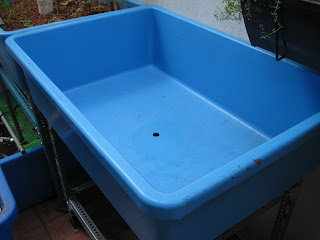
Kamis, 02 Juni 2016How to Grow Tomatoes Growing Tomatoes With Simple Tips Tomato Growing Tips Tomatoes are one of my favourite vegetable. It is very easy to grow as well as enjoyable to eat. Though technically tomato is a fruit of the plant but we all prefer to call this a vegetable. If you take proper care of your tomato plants, the yield can be overwhelming. Tomatoes are one of my favourite vegetable. It is very easy to grow as well as enjoyable to eat. Though technically tomato is a fruit of the plant but we all prefer to call this a vegetable. If you take proper care of your tomato plants, the yield can be overwhelming. Scientific name : Lycopersicon sp The tastes of tomatoes are very sensitive to the surroundings. So rather than focusing on only one variety, it is always sensible to try 3 to 4 varieties. It will help you find out which is the best variety suitable to your locality. Tomato Plants and Sunlight:Keep your tomato plant to a place where the plant will get plenty of sunlight. The fruit formation of a tomato plant requires at least 6 hours of direct sunlight. You can read more about the effect of sunlight on different plants in our earlier article here. Tomato Cage for Supporting A Tomato Plant:A Tomato plant needs support for its growth. You need to build cage or stakes at the time of planting. Staking keeps fruits off the ground whereas a tomato cage help the plant to hold its upright position. Tomatoes require plenty of water, specially during the summers. But while watering a tomato plant do not wet the leaves or the stem of the plant. Always put water directly into the soil near the roots(see watering guide for details). Pruning Tomato Plants:Take out any shoot that grows between the stem and main branches, these shoots always hinder the fruit growth. In gardening this process is called pruning of plants. With the same logic cut off the tip of the plant. It will help the plant to become more bushy with much more fruits. How To Plant Tomatoes:You can start either from seed or through seedlings purchased from nurseries. If you are starting from seeds, it is recommended to use seedling trays.fill these trays with potting soil and sow the seeds there. It is important to keep the trays indoor until the seeds germinate. Once they have grown up to 15- 20 cm you can transplant them outdoor. See transplantation techniques for detail. Before planting the seedlings make the soil ready by tilling and mixing compost or manure with the soil. It is recommended to plant the seedlings 2ft apart. It is necessary to keep the soil fertile. Add fertilizers two week prior to picking and two weeks after the picking. Tomato Pests and Diseases:Tomatoes are particularly susceptible to many pests and diseases. Horn-worms, Aphids, white-flies are few of the tomato pests which can reduce the production of the plant. Late blight (specially during monsoon) and distorted leaves are the common diseases to the plant. It is always wise to plant basil along with your tomato plant. Basil is a fantastic companion plant for tomatoes. It will help in distracting little pests from your tomato plant. This type of planting is called companion planting. Harvesting Tomatoes:Never pick tomatoes in green condition they will rot before get ripe. Leave them on the vine as long as possible. Never try to refrigerate ripe tomatoes. It will spoil the texture and taste of the perfectly ripe home grown tomato which is best eaten sun warm from the kitchen garden. I hope these simple tomato growing tips helped you in growing tomatoes. Do these simple steps and you can enjoy your home grown favourite vegetable and also find the distinctive flavor and taste which are definitely missing when you buy those from the stores. Thanks for reading. Keep your comments coming. Read more about tomatoes: FAQs About Tomato Growing Top 8 pests of Tomatoes Simple steps to save tomato seeds Top Five Companion Plants For Tomatoes New Grow Bed Putting it all togetherWith all the components ready, I assembled the new grow bed today. Im too tired to type now, so Ill just present some pictures along with some descriptive text on the construction process.
Read more
I begin by positioning the grow bed at the desired position.
 I learned a convenient way to wash them from the Backyard Aquaponics forum. Just fill the bag with water until full. Shake it. Then poke some holes to drain the water out.
Aaah~~! A new grow bed filled with fresh growing media!
Thanks for reading!
Langganan:
Postingan (Atom)
Aquaponics Build Copyright © 2016 -- Powered by Blogger 
| ||||||||||||||||||||||||