Join us as we tackle the tough questions raised by the ongoing environmental catastrophe like one in the Gulf of Mexico. Topics will include mitigation of the spill and the impending cleanup efforts; energy alternatives; policy and economics; as well as new technology that can help us build a self-reliantculture.
This people care about the ocean.
 Sylvia Earle, Mission Blue Read full bio
Sylvia Earle, called “Living Legend” by the Library of Congress and “Hero for the Planet” by Time, is an oceanographer, explorer, author and lecturer with a deep commitment to research through personal exploration. Earle’s work has been at the frontier of deep ocean exploration for four decades. Earle has led more than 50 expeditions worldwide involving more than 6,000 hours underwater.
 Philippe Cousteau, EarthEcho Read full bio
Philippe Cousteau is the son of Jan and Philippe Cousteau Sr., and the grandson of Captain Jacques-Yves Cousteau. As a member of the legendary family, Philippe is continuing the work of his father through EarthEcho International, the non-profit organization he founded with his sister and mother and of which he serves as CEO. Philippe went diving into the Gulf oil spill, witnessing first hand the damage being done.
 David Gallo, Woods Hole Institution Read full bio
Dave Gallo works to push the bounds of oceanic discovery. Active in undersea exploration, he was one of the first oceanographers to use a combination of manned submersibles and robots to map the ocean world with unprecedented clarity and detail. Gallo is now working with director James Cameron and other undersea experts on ideas to stop the oil spill.
 Susan Shaw, Marine Environmental Research Institute
Read full bio
Dr. Susan Shaw is an internationally recognized marine toxicologist, author, explorer, and founder/director of the Marine Environmental Research Institute. Shaw is applying her expertise to the Gulf catastrophe by launching an independent, region-wide investigation of the toxic impacts of oil and dispersants on marine life and human health.
 Andrew Sharpless, Oceana Read full bio
Andrew Sharpless is the CEO of Oceana, the world’s largest international nonprofit dedicated to ocean conservation. A graduate of Harvard College, Harvard Law School, and the London School of Economics, Sharpless was one of the founding managers of RealNetworks, the Seattle-based pioneer in the field of online music and video play-back technology.
 Wolcott Henry, Munson Foundation and Marine Photobank Read full bio
For over 20 years, Mr. Henry has been president of The Curtis and Edith Munson Foundation, a private foundation that supports marine conservation with an emphasis on fisheries management, marine protected areas, and coral reefs. In addition, Mr. Henry is an accomplished underwater photographer. As a contract photographer for the National Geographic Society, he has collaborated with Sylvia Earle.
 Amory Lovins, Rocky Mountain Institute Read full bio
Amory Lovins is Chairman and Chief Scientist of the Rocky Mountain Institute. For four decades he has worked in energy policy and related areas. Lovins worked professionally as an environmentalist in the 1970s and since then as an analyst of a “soft energy path” for the United States and other nations. Time magazine named Lovins as one of the world’s 100 most influential people.
 Phil Radford, Greenpeace Read full bio
Phil Radford is the Executive Director of Greenpeace USA. He has a background in grassroots organizing, campaign planning, and energy policy. As Grassroots Director, it was Phil’s vision and leadership that built Greenpeace’s $9 million Grassroots Program and our cutting edge online to on-the-ground organizing, as well as a robust student organizing and training program.
 Carl Safina, Blue Ocean Institute Read full bio
Dr. Carl Safina is a prominent ecologist and marine conservationist and president of Blue Ocean Institute, an environmental organization based in Cold Spring Harbor, New York. He has also been a recreational fisherman since childhood. A winner of the prestigious Pew Fellowship, MacArthur Fellowship and Guggenheim Fellowship, Safina has written five books.
 Reid Detchon, UN Foundation Read full bio
Reid Detchon is Vice President for Energy and Climate at the United Nations Foundation. He is also the executive director of the Energy Future Coalition, a broad-based non-partisan public policy initiative supported by the UN Foundation that seeks to bring about change in U.S. energy policy to address critical challenges related to the production and use of energy.
 Ronald Atlas, University of Louisville Read full bio
Dr. Ronald Atlas pioneered the field of bioremediation and showed that fertilizer application can hasten the rates of oil removal following oil spillages. He has worked on several major oil spills, including the Amoco Cadiz spill in Brittany, the IXTOC-1 spill in the Gulf of Mexico, the Exxon Valdez spill in the Gulf of Alaska, and the Kuwait oil spill following the first Gulf War.
 Jigar Shah, Carbon War Room Read full bio
A renowned visionary committed to renewable energy, Jigar Shah launched SunEdison in 2003 based upon a business plan he developed in 1999. That plan became the basis of the SunEdison model: Simplify solar as a service. Shah was tapped by Virgin mogul Richard Branson to head up the Carbon War Room, which harnesses the power of entrepreneurs to implement market-driven solutions to climate change.
 John Francis, Planetwalk, National Geographic Read full bio
In the early 1970s John Francis gave up using motorized vehicles after witnessing the devastating effects of an oil spill in San Francisco Bay. Soon afterwards he took an even more radical step: a vow of silence that lasted 17 years, during which he undertook a pilgrimage by foot across America on behalf of the environment and world peace, earning a Ph.D. in environmental studies along the way.
 Darron Collins, World Wildlife Fund Read full bio
Dr. Darron Collins joined WWF in 2001. A cultural anthropologist and an expert in ethnobotany, Darron has designed and implemented human-centered conservation programs for WWF in Latin America, Russia, China and Mongolia. His most recent endeavors involve using creative media to share WWF’s work with new, influential audiences and use storytelling to drive conservation on the ground.
 Mike Mendez, Sapphire Energy Read full bio
Mike Mendez has held a number of top industry positions at the forefront of the molecular biology revolution. In addition to serving as Director of Bioengineering at GenWay, Mr. Mendez was also associate director of Exploratory Research at Takeda Pharmaceuticals. There he established a new department that focused on novel platforms for over-expression, purification, and crystallization of membrane proteins.
 Jackie Savitz, Oceana Read full bio
Jackie Savitz is Campaign Director and Senior Scientist for Oceana’s Pollution Campaigns. She has shaped and led campaigns and projects dealing with global warming pollution from ships, mercury contamination of fish, and cruise ship pollution among other issues. Savitz has a background in marine biology and environmental toxicology combined with more than fifteen years of policy analysis experience.
 Jim Geringer, ESRI Read full bio
Jim Geringer was elected as Wyoming’s 30th governor in 1994 and completed his second term in January 2003. His advocacy for technology in government has centered on the end result of using technology to enhance citizen services. That advocacy has led Jim to join in a full-time capacity with Environmental Systems Research Institute (ESRI) the top provider of geographic information systems software.
 Lisa Margonelli, New America Foundation Read full bio
Lisa Margonelli writes about the global culture and economy of energy. Her book about the oil supply chain, Oil On the Brain: Petroleum’s Long Strange Trip to Your Tank, was published by Nan Talese/Doubleday in 2007. Recognized as one of the 25 Notable Books of 2007 by the American Library Association, Oil On the Brain also won a 2008 Northern California Book Award for general nonfiction.
 Mike Tidwell, Chesapeake Climate Action Network Read full bio
Mike Tidwell is founder and director of the Chesapeake Climate Action Network, a grassroots nonprofit dedicated to raising awareness about the impacts and solutions associated with global warming in Maryland, Virginia, and DC. He is also an author and filmmaker. Tidwell received the Audubon Naturalist Society’s prestigious “Conservation Award.”
 Casey DeMoss Roberts, Gulf Restoration Network Read full bio
Casey DeMoss Roberts works to develop and implement water resource campaigns and advance GRN public policy positions through public education and mobilization, including organizing outreach events and workshops. Casey has worked on climate and energy related issues for several years with both national and regional groups.
 Diarmuid O’Connell, Tesla Motors Read full bio
Diarmuid joined Tesla in 2006, and currently serves as the Vice President of Business Development in which capacity he manages commercial relationships and all aspects of government affairs. Before joining Tesla, Diarmuid served as Chief of Staff for Political Military Affairs at the US State Department, where he was involved in policy and operational support to the U.S military in various theaters of operation.
 Klaus Lackner, Columbia University Read full bio
Klaus Lackner is the Ewing Worzel Professor of Geophysics at Columbia University, where he is also the Director of the Lenfest Center for Sustainable Energy, the Chair of the Department of Earth and Environmental Engineering, and a member of the Earth Institute faculty.
.  David Johnson, Institute of Maritime History Read full bio
David Johnson is a professor at American University, former director and board member of the Institute of Maritime History, a non-profit dedicated to the preservation and documentation of archaeological remains related to maritime history. The IMH is currently working in the Gulf on mitigating the effects of the disaster on submerged cultural resources, namely underwater archaeological sites and historical shipwrecks.
 Christen Lien, Violist and Composer Read full bio
Using guitar effects and a looping machine, classically trained violist Christen Lien performs original compositions on viola. Spontaneously creating then incorporating layers of live effects, Lien paints music with guitar effect pedals, live looping, melodic mixing and expressive performance. For TEDxOilSpill, Lien will debut a song inspired by her recent trip to the Gulf Coast, in response to the oil spill.
 Elizabeth Coffman, Ted Hardin,
Long Distance Productions Read full bio
Elizabeth Coffman and Ted Hardin are filmmakers who have recorded the environmental crisis in southern Louisiana for the last seven years. Working with Louisiana poet Martha Serpas, their documentary, “Veins in the Gulf,” highlights the community of scientists, engineers and artists trying to save the productive bayou region.
 Leroy Stick, @BPGlobalPR Read full bio
Leroy Stick is the pseudonymous humorist behind @BPGlobalPR, the Twitter account that has satirized BP’s statements to the public and in the process, given a way for those frustrated by the oil spill to vent their anger with humor. He has over 160,000 followers on Twitter and continues to spread satire in order to raise awareness to the actions of BP and those responding to the spill.
Do you care?
Join the conversation.
Write your vision.
CCRES
 0
komentar


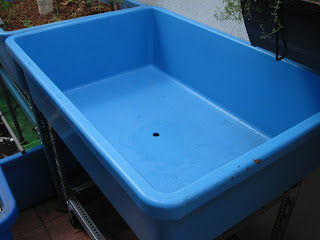


 bag with thick layer of Mulch. Now you have it, your own garden bed.


